Public cloud offers businesses many advantages, including flexibility, scalability, resiliency, and other vast opportunities to grow and innovate compared to traditional on-premise data centers. It becomes an excellent choice for businesses of all sizes when coupled with cost-effectiveness. However, operating and utilizing the cloud without being mindful of cost can impact your budget negatively. The best possible way to counter it is by doing cloud cost analysis. The Cloud Cost Analysis can efficiently analyze your expenses, segregating finances with key areas and ways to optimize costs. This in-depth blog covers all the costing factors of cloud models, cloud analysis, and cloud economics. It is a quick guide to following best practices to analyze and optimize your cloud computing cost.
Cloud Economics: An Overview
To understand cloud cost analysis, knowing about cloud economics and how it works is inevitable. Cloud Economics is a standard process that examines cloud computing costs and their functional and financial impact on businesses. This study analyzes financial factors such as Return on Investment ( ROI), Total Cost of Ownership ( TCO), legacy hardware costs, and other fundamental investments for cloud vs on-premises data centers. Cloud economics aims to help businesses make informed decisions about whether or not to adopt cloud computing and optimize their cloud usage for maximum cost savings.To conduct a thorough cloud economics analysis, it’s essential to consider the expected financial and technological factors and the cultural elements that can impact the outcome. Below are some aspects that need to be evaluated:
- Current Processes
If a company decides to move its operations to the cloud, it may affect how it handles its core business processes. This shift may require additional employee training and skills, and the teams involved may need to adjust their workload to accommodate the change. The key areas will determine how long and extensive the cloud migration plan will be.
- Reward/ Risk Threshold
As businesses move to cloud computing, will it affect how they do their core business processes? Will they need to train their staff with new skills if it does? And will their teams have the capacity to handle this change? The answers to these questions will determine the size and duration of our cloud migration plan.
- Existing Biases
We all have biases due to our human nature. Sometimes, it can be difficult for organizations to adopt new technologies because of staff resistance or outdated systems. Organizations need to be aware of these biases to objectively evaluate cloud economics and work towards overcoming them.
What is Cloud Cost Analysis?
Cloud cost analysis is the process of evaluating the expenses associated with utilizing cloud computing services. When an organization uses cloud services, they are charged for their computing resources, such as storage, processing power, and network bandwidth. These costs can rapidly increase if businesses are not careful about managing their usage.An organization must track its cloud usage and expenses for a cost analysis. This can involve monitoring their usage of specific cloud resources, such as virtual machines or databases, and analyzing their cloud bills to identify areas of overspending. By doing so, they can identify opportunities to optimize their usage and reduce costs.
Why is Cloud Cost Analysis Important?
Cloud cost analysis is essential for businesses today since it greatly impacts the bottom line. Understanding and minimizing cloud expenses is critical for financial efficiency and strategic decision-making as businesses progressively transfer their activities to the cloud. Businesses can gain significant insights into their cloud spending patterns by doing a complete cloud cost analysis, allowing them to discover overspending areas, optimize resource utilization, and eventually lower overall costs.
Furthermore, cloud cost analysis offers proactive cost management initiatives, ensuring that enterprises remain under budget while maximizing the value of cloud services. Given the complexities of cloud pricing schemes and the dynamic nature of cloud environments, doing regular cost analyses enables businesses to make informed decisions about resource allocation, scalability, and service selection. Finally, by incorporating cloud cost analysis into their operational plan, organizations can improve financial efficiency, increase competitiveness, and accelerate business growth.
Key Components of Cloud Cost Analysis
Cloud cost analysis comprises many elements, including infrastructure, networking, storage, and licensing. The better a company knows the components of a cloud cost analysis, the more likely they are to include all required components in their research. Let’s understand the key elements of cloud cost analysis:
Data Transfer Cost
Data transfer is the flow of data within and across cloud services. While some cloud services provide free or reduced incoming data transfers, outbound data transfers are typically priced based on volume and distance. Analyzing data transfer patterns and managing data flow can reduce these expenses. For example, a provider may charge for transfers between several regions or between cloud providers while providing free or subsidized data transfer prices within specific zones.Understanding the consequences connected with data transfer fees is crucial when evaluating and minimizing cloud expenses. Businesses can do so by
- Analyze and optimize data transmission patterns.
- Use content delivery networks (CDNs).
- Use cloud provider-specific data transfer solutions, such as AWS Direct Connect and Azure ExpressRoute.
Infrastructure Cost
Infrastructure costs include all of the costs related to computer resources, including networking infrastructure, virtual machines, and containers. These expenses, which include compute hours, memory, and network bandwidth, are normally computed based on consumption. Infrastructure costs can be minimized by using reserved instances, rightsizing instances, and installing auto-scaling. In order to estimate infrastructure costs as accurately as possible, businesses must
- Analyze and comprehend pricing models (such as spot, reserved, and on-demand instances).
- Analyze how use and instance types affect expenses.
- Calculate the price of virtual machines.
- Examine the expenses associated with the CPU and RAM utilized, as well as the hardware, software, and networking components that comprise the infrastructure.
Licensing Cost
The use of cloud-deployed software and third-party services incurs licensing expenses. Depending on the licensing arrangement, charges may be paid based on variables such as consumption, user numbers, or feature set. Understanding license agreements, optimizing software usage, and researching open-source alternatives can all help reduce licensing costs. Certain cloud service providers allow users to bring their own software licenses to the cloud. However, before doing so, IT teams must conduct an analysis to understand their
- Licensing Agreements
- License Type and Pricing
- Software Asset Management
Storage Cost
Storage expenses concern the distribution and maintenance of data among cloud storage services, including object, block, and archival storage. These expenses are usually determined by variables including redundancy options, data retrieval frequency, and storage capacity. Storage costs can be decreased by putting data lifecycle policies, tiered storage systems, and compression techniques into practice. Cloud providers often offer multiple storage pricing structures across different countries, much as they do for data transfers. When estimating storage costs, it is essential to consider location-specific pricing and data residency regulations. Also need to be mindful about
- Compression and Deduplication
- Data Redundancy and Replication
- Storage Class and Access Patterns
Additional Costs
Beyond infrastructure and basic support and maintenance, there are many other costs associated with cloud computing. These expenses may cover serverless computing, machine learning, and managed services to enable cloud operations. Additional expenses may also arise from disaster recovery plans, backups, and regulatory requirements.These extra expenses could be:
- Network egress fees are costs associated with data leaving the cloud environment. These costs are frequently incurred when integrating with external systems or providing end users with information.
- Fees for premium services, continuous maintenance of cloud resources, and vendor support agreements are referred to as support and maintenance costs.
- Fees for computational operations on cloud data, including analytics, machine learning, and data transformation.
- Costs associated with attaining and upholding regulatory compliance, putting security measures in place, and protecting sensitive data.
Best Practices for Cloud Cost Management
Optimizing expenses and maximizing the value of cloud services need effective management of cloud costs. Businesses can increase cost transparency, control, and efficiency by adhering to best practices for cloud cost management. Here are some actions that should be considered:
- Regular Monitoring
- Continuously monitor cloud usage and spending to detect trends, anomalies, and areas for improvement.
- Set up monitoring tools and dashboards to track resource use, performance indicators, and cost changes in real-time.
- Utilize Cloud Providers and Third Party Tools
- Use the built-in cost management tools given by cloud service providers, such as AWS Cost Explorer, Google Cloud Billing, and Azure Cost Management.
- Investigate third-party cost optimization and management solutions to supplement and improve native cloud technologies, which provide extra features and insights.
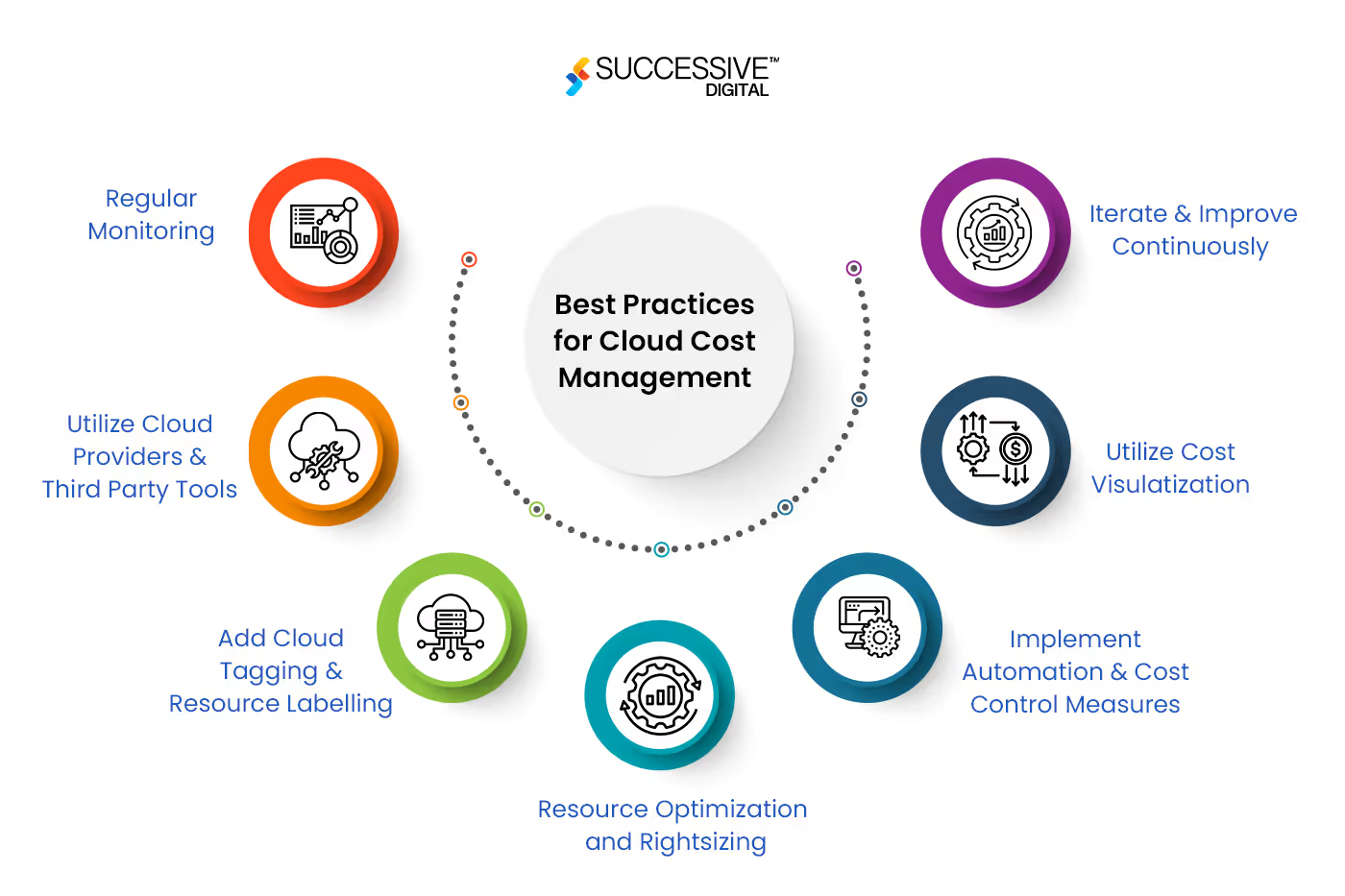
- Add Cloud Tagging and Resource Labeling
- For cloud resources, use standard labeling and tagging procedures to classify and attribute expenses precisely.
- Organize resources according to parameters like project, application, environment, department, or cost center to make cost distribution and accountability across business units easier.
- Resource Optimization and Rightsizing
- By scaling instances, storage volumes, and other cloud resources according to actual usage and performance needs, maximize resource consumption.
- Determine which resources are over or underutilized, then modify configurations to meet workload expectations and reduce wasteful spending.
- Implement Automation and Cost Control Measures
- Automate repetitive operations, such as scheduling, policy enforcement, and auto-scaling, to increase productivity and decrease human overhead.
- To avoid cost overruns and uphold financial governance, implement cost control methods like expenditure caps, budget alerts, and access controls.
- Utilize Cost Visualization
- To learn more about cost drivers, trends, and areas for cost savings, make use of cost visualization tools and reports.
- Use interactive dashboards, charts, and graphs to display cost data in order to help in decision-making and stakeholder communication.
- Iterate and Improve Continuously
- It is imperative to consistently assess and improve cost management techniques in response to input, insights gained, and evolving business needs.
- Encourage cooperation and creativity in cost-optimization initiatives by fostering an organizational culture of accountability and cost awareness.
How to Calculate Cloud Computing Costs?
It can be daunting to calculate cloud computing costs, but do not worry! We’re here to walk you through step-by-step, ensuring you understand everything along the way.
- Define Requirements
Before you start calculating costs, make sure you have a comprehensive understanding of your cloud migration needs. Consider the kind of workloads you’ll be operating, performance objectives, data storage requirements, and any regulatory compliance mandates. Understanding your specific needs ahead of time will help you develop more accurate cost estimates.
- Select The Right Service Model
Next, and decide which cloud service model best suits your needs and financial constraints. There are differences in the functionality and pricing offered by each model, which includes Infrastructure as a Service (IaaS), Platform as a Service (PaaS), and Software as a Service (SaaS). When choosing, consider aspects like scalability, adaptability, and management overhead.
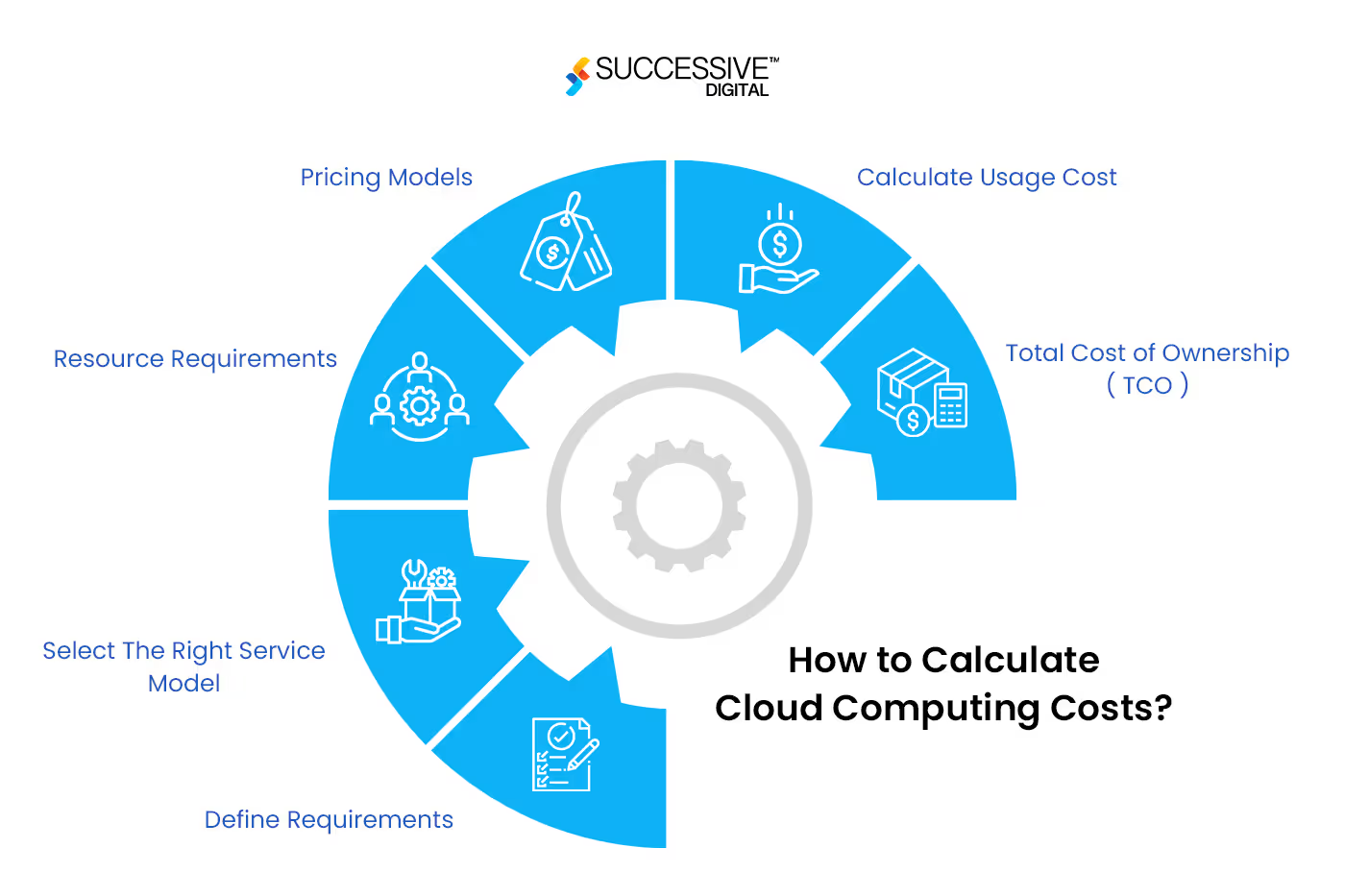
- Resource Requirements
Once you’ve decided on a service model, you’ll need to determine the resources required to serve your cloud workloads. This includes determining the processing capabilities (CPU, RAM), storage capacity (disk space), and network bandwidth needed. Take into account peak usage hours, anticipated growth, and redundancy requirements.
- Pricing Models
Familiarize yourself with the pricing options provided by your cloud provider. Most providers provide a pay-as-you-go approach, in which you are charged according to your actual use of compute instances, storage, and other services. Furthermore, many providers give discounted price options for recurring usage, such as reserved instances or volume discounts. Take the time to learn about the pricing tiers, discounts, and billing cycles offered by your supplier.
- Calculate Usage Cost
Use your cloud provider’s pricing tools and online calculators to determine your usage expenses. These tools let you enter your resource requirements and consumption patterns to get precise cost estimations. Consider the instance type, storage options, data transfer volumes, and any other services or features you may need. This will offer you a clear picture of your expected expenses.
- Total Cost of Ownership ( TCO )
Finally, analyze the total cost of ownership (TCO) of running your workloads in the cloud versus on-premises infrastructure. This comprises both direct and indirect expenditures for employing cloud services, such as hardware, software licenses, maintenance, and operational overhead. By analyzing TCO, you can make an informed decision regarding which deployment option is most cost-effective for your business.
What is Cloud Cost Optimization?
Cloud cost optimization is the ongoing process of refining and upgrading your cloud solution to reduce overall costs. Cost-optimized cloud operations can fully utilize available resources and meet all functional needs at the lowest possible cost. At the most fundamental level, cloud cost optimization includes:
- Increasing asset awareness throughout the business through tagging and tracking
- Collecting crucial metric data for annual and monthly cost analysis.
- Developing a data-driven purchasing strategy.
- Analyze all existing resources for efficiency and use.
Do you want to optimize your spending on the cloud?Contact us
Cloud Cost Management Tools
Fortunately, a number of cloud cost management tools exist to assist businesses. Let’s dive into these tools and look at their features and benefits:
- AWS Cost Explorer
AWS Cost Explorer is a useful tool from Amazon Web Services (AWS) that allows users to visualize, understand, and manage their AWS spending.
Key Features
- Detailed Cost Analysis: Gain insight into your AWS spending by breaking it down by service, location, instance type, and more.
- Forecasting and Budgeting: Forecast future expenditure trends and create budgets to effectively monitor and control costs.
- Cost Anomaly Detection: Recognize odd expenditure trends and get notifications about probable cost anomalies.
- Reserved Instance suggestions: Get cost-effective suggestions for acquiring reserved instances based on your usage patterns.
Key Benefit
AWS Cost Explorer offers essential data and tools for businesses to assess, manage, and control their AWS spending, eventually lowering costs and increasing ROI.
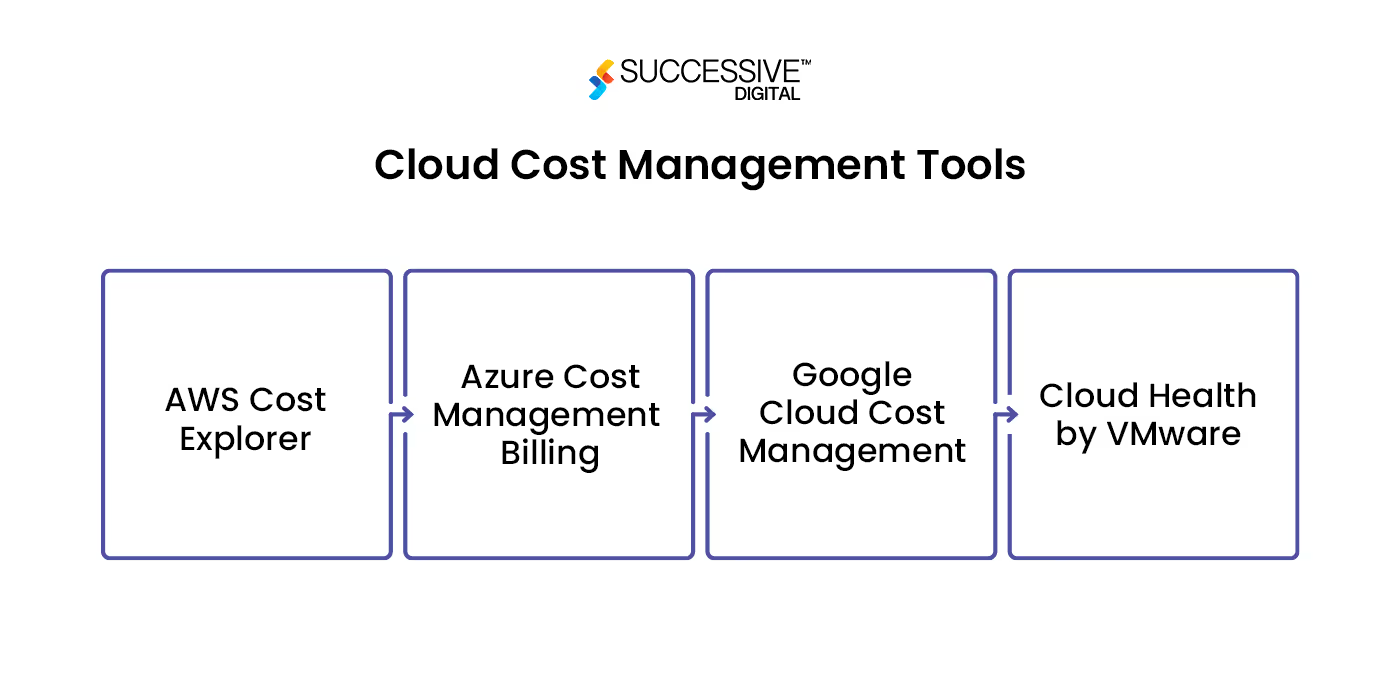
- Azure Cost Management + Billing
Azure Cost Management + Billing is Microsoft Azure’s comprehensive solution for controlling and optimizing cloud costs.
Key Features
- Cost analysis and reporting: Using customizable reports and dashboards, you can analyze and visualize your Azure spending.
- Budgeting and forecasting: Establish budget boundaries and projections to proactively monitor and control expenditures.
- Cost notifications and advice: Receive budget overrun notifications as well as cost-saving advice.
- Reserved Instance Planner: Save money by purchasing reserved instances for predictable workloads.
Key Benefit
With the powerful cost management tools offered by Azure Cost Management + Billing, businesses can effectively track, evaluate, and optimize their Azure spending.
- Google Cloud Cost Management
A variety of cost-management solutions are available from Google Cloud to assist companies in comprehending, evaluating, and optimizing their use of cloud computing.
Key Features
- Cost Reporting and Analysis: Monitor expenses for all Google Cloud services with access to comprehensive cost reports and interactive dashboards.
- Setting up budget alerts and projections will help you keep an eye on and manage expenses in real time.
- Get customized suggestions for cost optimization that take into account consumption trends and industry best practices.
- Commitment Planning: For long-term savings, purchase committed use contracts to optimize expenses.
Key Benefit
Google Cloud Cost Management solutions give companies the knowledge and suggestions they need to maximize value, increase efficiency, and optimize cloud spending.
- Cloud Health by VMware
AWS, Azure, Google Cloud, and other multi-cloud settings are supported by CloudHealth, an all-inclusive platform for managing cloud costs.
Key Features
- Unified Cost Management: Use a single platform to see and manage your cloud spending across several providers.
- Governance and Cost Optimization: Reduce expenses by following advice on reserved capacity purchases, rightsizing instances, and putting governance guidelines into place.
- Automation: To guarantee compliance and cost-effectiveness, automate tasks, and enforce cost management policies.
- FinOps Reporting and Analytics: Use customized reports and analytics to monitor expenditure, examine patterns, and make well-informed choices.
Key Benefit
CloudHealth provides comprehensive tools and capabilities to help enterprises manage expenses in complicated multi-cloud settings. This allows them to minimize spending and achieve better financial results.
Are you able to leverage the cloud to its full potential and optimize your spending? If not, here is what you need:
A Cloud Operating Model
The Cloud Operating Model is a high-level overview of how a business will implement its Cloud Strategy. It is a roadmap for efficiently arranging to achieve the capabilities and outputs necessary to provide value through cloud services. After the Cloud Strategy has been created, ratified, and circulated, the Cloud Operating Model describes the operational processes required for a business to carry out the strategy.IT teams struggle to provide enough assistance for internally developed and externally acquired cloud services. When delivering services across different functions and domains, the operational approach of teams handling network, operating systems, storage, middleware, and security becomes less effective. While specific tools, methods, and technologies are necessary for effective cloud service development and management, these teams still play a vital role in providing expertise in their areas. That’s where you need a strategically planned cloud operating model.
Why Does Your Business Need a Cloud Operating Model?
Your company requires a Cloud Operating Model to fully leverage the power of cloud computing while staying on track with strategic goals. Implementing a formal framework for cloud adoption and operations allows you to streamline procedures, reduce costs, and boost creativity. The Cloud Operating Model guarantees that your cloud strategy is linked with business objectives, allowing agility, scalability, and resilience. With clear roles, responsibilities, and governance in place, your company can maximize the value of its cloud investments, improve security and compliance, and future-proof operations for long-term success.
- It will strategically align your business
A Cloud Operating Model guarantees that your cloud approach aligns with your business goals and priorities. Cloud initiatives are intimately linked to the organization’s mission and vision by specifying specific goals, roles, and duties. This alignment promotes concentration, accountability, and team collaboration, resulting in more successful outputs.
- It will Improve Operational Efficiency
With the right Cloud Operating Model in place, your company can streamline processes and maximize resource use in the cloud. Implementing standardized processes, automation, and best practices can help you enhance efficiency, eliminate manual overhead, and shorten the time to market for new goods and services. This operational efficiency allows your organization to remain agile and responsive.
- It will optimize cost.
Cloud computing offers cost savings and better cost control, but achieving these benefits needs careful planning and execution. A Cloud Operating Model assists your company in optimizing its cloud spending by installing cost visibility tools, enforcing governance regulations, and applying cost-saving tactics such as rightsizing instances and using reserved capacity. Cost optimization allows you to maximize the value of your cloud investments and generate better financial results.
- It will ensure security and compliance.
Cloud-based enterprises prioritize security and compliance. A Cloud Operating Model enables your company to build strong security controls, enforce compliance standards, and limit the risks associated with cloud adoption. By following industry best practices and regulatory requirements, you can protect the integrity and confidentiality of your cloud data, foster consumer trust, and avoid costly security breaches and compliance issues.
- It will enhance scalability and resilience.
Cloud computing provides unprecedented flexibility and resilience, allowing your company to scale resources up or down in response to changing demand and easily endure disruptions. A Cloud Operating Model provides the foundation and techniques for efficiently leveraging these capabilities, allowing you to handle traffic spikes, enter new markets, and recover fast from outages or disasters.
How do we help?
Successive Digital is a decade-old consulting firm. It provides effective Cloud Operating Models adapted to your business requirements. Our experts ensure that your cloud transfer is seamless and successful. Our established track record in developing best-in-class Cloud Operating Models enables enterprises to fully reap the benefits of cloud computing. By teaming with Successive Digital, you receive access to a team of professionals who will walk you through the entire process, from strategic planning to implementation and optimization. With our holistic strategy, we assist businesses in streamlining operations, reducing expenses, and driving cloud innovation.
To Sum Up
Cloud Cost Analysis is a great practice that should be done by all businesses utilizing cloud in some way or the other. It is essential to businesses aiming to maximize the value of their cloud investments. Businesses can gain significant insights into their spending habits by breaking down essential components such as data transport, infrastructure, licensing, and storage expenses. Best practices such as regular monitoring, using existing technologies, optimizing resources, and automating tasks can help manage costs and optimize returns. Businesses that take a strategic approach to cloud cost management can achieve greater transparency, efficiency, and, ultimately, better results from their cloud operations.
FAQs
What role does automation play in cloud cost analysis?
Automation plays a crucial role in cloud cost analysis by automating processes such as resource provisioning, scaling, and optimization, reducing manual overhead, and ensuring consistency and efficiency in cost management practices.
How can businesses ensure security and compliance while managing cloud costs?
Businesses can ensure security and compliance while managing cloud costs by implementing robust security controls, encrypting sensitive data, enforcing access controls and permissions, and monitoring compliance violations using cloud-native security tools and services.
What are some common challenges in cloud cost analysis?
Common challenges in cloud cost analysis include difficulty in predicting usage patterns, managing costs across multiple cloud providers, understanding complex pricing models, and optimizing costs while maintaining performance and scalability.
How can businesses effectively monitor their cloud costs?
Businesses can effectively monitor their cloud costs by using cloud cost management tools, setting up budget alerts, analyzing cost breakdowns by service and resource type, and implementing cost allocation and chargeback mechanisms.
Do I need Cloud Cost Analysis?
Yes, conducting cloud cost analysis is essential for any business leveraging cloud services. Understanding and optimizing cloud costs is necessary to ensure financial efficiency and strategic decision-making. By analyzing cloud spending patterns, businesses can identify areas of overspending, optimize resource utilization, and ultimately reduce overall costs.