In healthcare app development, it is crucial to ensure the security of patient data, aligning with industry regulations and guidelines. Unauthorized access, network vulnerabilities, and data theft are some of the primary issues most healthcare industries and medical service providers encounter. As a result, implementing the Health Insurance Portability and Accountability Act (HIPAA) becomes an unquestionable requirement for secure and credible HIPAA compliant app development.Pharmacy chains, medical centers, group health plans, hospital chains, and small healthcare service providers are all subjected to the EMR HIPAA compliance checklist. Violating these can lead to heavy penalties and, most importantly, loss of reputation in the healthcare marketplace.The Health and Human Services (HHS) Office for Civil Rights (OCR) settled or imposed a civil money penalty in 137 cases, summing up the penalty amount of $136,918,772.00. Hence, a healthcare app must adhere to HIPAA compliant software development guidelines in this mobile-first era. These compliances are crucial to protect the healthcare industry and its users from misusing the data.Table of content
- What is HIPAA Compliance?
- The Importance of HIPAA Compliance
- When Your Healthcare Apps Should Comply With HIPAA
- Essential Rules to Consider For HIPAA Compliant App Development
- Follow the HIPAA Compliant App Development Checklist
- Features for HIPAA Compliant Mobile App Development
- The Process of Implementing HIPAA Compliant Mobile App
- Common Pitfalls to Avoid While Developing a HIPAA Compliant Healthcare App
- How Much Does HIPAA Compliant Healthcare App Development Cost?
- Successive Digital: Your Road to HIPAA Compliant App Development
- Conclusion
What is HIPAA Compliance?
HIPAA, a US federal law, has become universal rules and regulations that must be followed by businesses that fall under its purview. HIPAA rules aim to ensure patients’ health data security and safe management while combating abuse, fraud, and waste in health insurance and healthcare delivery. This results in improved access to long-term care services and health insurance.If your healthcare application comes under HIPAA-compliance software development guidelines, you must comply with this law as a reliable business owner. Otherwise, you will risk a heavy penalty by HHS. As medical providers strive to meet the demands of healthcare consumerization, you can hire a healthcare app development company to kickstart your healthcare digital transformation journey with HIPAA compliant app development.
The Importance of HIPAA Compliance
Healthcare mobile apps lacking security measures and standards can lead to cybersecurity breaches or data leaks, posing additional risks of compromising users’ security and privacy. However, data encryption, proper security standards, and access controls can prevent most of these risks. Therefore, HIPAA compliant app development is essential for helping both healthcare institutions and patients.
For Healthcare Service Providers
If healthcare service providers, generally called covered entities, build software or applications that fail to follow HIPAA law, they will be held liable to pay a considerable penalty. Moreover, patients or your consumers are likely to trust applications compliant with HIPAA as they trust that their data is handled securely and confidentially.
For Patients
Patients have the complete right to their medical details and can decide when and who can access them. However, this sensitive information is widely shared and utilized for various reasons, such as treatment plans, insurance claims, billing, etc. Therefore, patients should only trust companies following HIPAA compliance for web applications as they will ensure high confidentiality and privacy levels for patient information.
When Your Healthcare Apps Should Comply With HIPAA
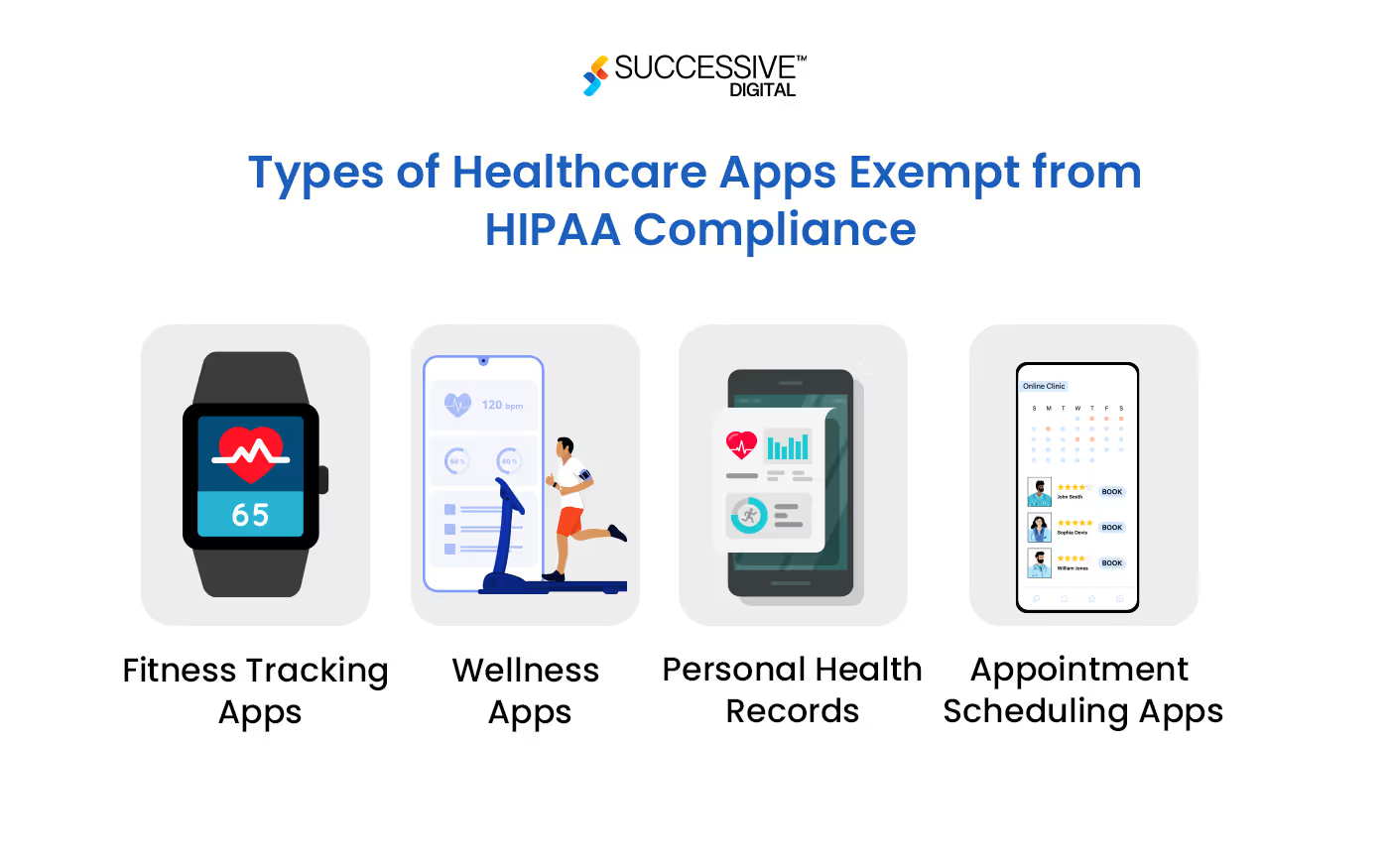
Not all healthcare applications need to be HIPAA compliant. Therefore, a thorough study and understanding of app objectives is necessary to determine whether it should comply with HIPAA. On the other hand, if your healthcare application uses Protected Health Information (PHI), it should follow the EMR HIPAA compliance checklist.Here are the entities and healthcare services that may handle PHI and, therefore, must comply with HIPAA rules.
Covered Entity
By following HIPAA compliance for web applications, you can protect your/my/everybody’s medical services information, i.e., PHI. Covered entities are directly involved in safe storing and transmitting PHI, and HIPAA laws apply to these businesses, including:
- Health plans
- Health care clearinghouses
- Health care providers
- Medicare prescription drug card sponsors
- Business associates (individuals or entities that handle PHI)
Data
Next, you must understand the type of data your mHealth collects, shares, and processes to determine whether the HIPAA guidelines are compulsory for the development process or not. Here are the types of data subject to HIPAA compliance, and if your application falls under any of these categories, then you must dive deeper into the app requirements and purpose.Patient DemographicsName, address, phone number, email address, date of birth, social security number, and other identifiers.Medical HistoryDiagnoses, treatment plans, medical procedures, and other information related to a patient’s health condition.Clinical Test ResultsLaboratory test results, imaging reports, and other diagnostic findings.Treatment InformationDetails about medications, prescriptions, therapies, and other forms of medical treatment.Billing and Insurance InformationBilling and Insurance Information: Insurance policy details, billing records, and financial information associated with healthcare services.Research Data Linked to Identifiable IndividualsResearch data that includes identifiable information about patients participating in studies or clinical trials.Healthcare Provider IdentifiersNPI (National Provider Identifier), provider names, and other identifiers associated with healthcare professionals and organizations.
Software Security
Adhering to HIPAA regulations ensures your applications have advanced security measures to minimize data breaches and protect patient privacy. HIPAA compliant app development involves a comprehensive approach to security, including access controls, audit trails, and other measures. Hence, the technology used for the protection and control access of the ePHI is also a contributing factor that helps to identify whether or not healthcare app development falls under the HIPAA rules.Physical SafeguardsFacility access controls, workstation security, hardware inventory, and device encryption.Technical SafeguardsAccess controls, audit controls, integrity controls, and transmission security.Want to know about how AI can be a transformative technology for building a robust healthcare app? Read our blog on the role of AI in Healthcare App Development.
Essential Rules to Consider For HIPAA Compliant App Development
HIPAA compliance mandates the following specific rules and regulations for developing a healthcare application that stores and processes ePHI.Let’s understand the crucial rules and terms under HIPAA compliance:
Privacy Rule
The HIPAA Privacy Rule safeguards individuals’ medical records and health information held by covered entities by setting limitations on uses and disclosures without patient authorization. Thus, it protects PHI (electronic, oral, or paper) collected or transmitted by a covered entity, granting individuals rights to access and correct their health records.
Security Rule
This rule applies to ePHI to prevent data misuse or leaking, guaranteeing sensitive information’s confidentiality, integrity, and security. This practice implements administrative, physical, and technical protection measures with vulnerability assessment and preventive measures like data encryption, authorization, access control, and proper disposal methods.
Breach Notification Rule
Under the breach notification rule in HIPAA, the covered entities and their business associates are bound to notify individuals like patients or HHS and media of breaches disclosure of PHI. Any impermissible use or compromising privacy and security of PHI involving less than 500 individuals must be notified to HHS within 60 days.On the other hand, if the breach affects over 500 individuals, covered entities must notify media outlets along with HHS up to 60 calendar days.
Enforcement Rule
The HIPAA Enforcement Rule comes into action when ePHI has violated the provisions related to investigations, penalties, and enforcing compliance with the HIPAA rules. Moreover, it works unitedly with the Privacy Rule, Security Rule, and Breach Notification Rule for proper monitoring and enforcement.It contains rules and regulations on investigations, penalties for non-compliance, criminal and civil penalties, corrective action plans, resolution agreements and settlements, and appeals.
The Omnibus Rule
The HIPAA Omnibus Rule issued by the US Department of Health and Human Services (HHS) became effective in 2013, introducing significant changes and updates on HIPAA regulations. This rule mainly expanded the direct liability of business associates for compliance with certain HIPAA Privacy and Security Rule provisions.With the enhancement of breach notification rules, individual rights, Genetic Information Nondiscrimination Act (GINA) amendments, and security and privacy rules, it strengthens HIPAA privacy and security protections.
Follow the HIPAA Compliant App Development Checklist
Since HIPAA compliance is an ongoing process, the checklist is part of a broader strategy that includes regular training for staff, updates to policies and procedures, and staying informed about regulation changes. Additionally, consulting with legal and compliance experts in a healthcare app development company is advisable to ensure your app fully meets HIPAA requirements.
Step 1: Determine the Privacy and Security Requirements
- Conduct a comprehensive risk assessment to identify potential threats and vulnerabilities.
- Classify data handled by the app for implementing targeted security controls.
- Ensure that the app’s features and functionalities align with HIPAA requirements.
Step 2: Implement Security Measures and Technical Protections
- Encrypt data to secure it during transmission and at rest.
- Implement access controls to restrict access privileges.
- Keep systems and applications up to date with the latest security patches.
Step 3: Manage Associate Agreements
- Verify business associates comply with the Business Associate Agreement (BAA) terms.
- Educate business associates on HIPAA regulations, emphasizing their roles.
- Regularly update BAAs to maintain business practices and legal requirements.
Step 4: Execute Breach Notification Plan
- Categorize incidents to guide the appropriate response.
- Outline communication protocols within the breach notification plan.
- Regularly test the breach notification plan to ensure its effectiveness.
Step 5: Conduct Compliance Audits
- Clearly define the scope and objectives of the compliance audit.
- Schedule compliance audits to identify potential areas of non-compliance.
- Document the results of the audit for corrective action.
Step 6: Assess and Mitigate Audit Risks
- Identify potential risks associated with the audit process that may impact compliance.
- Develop and implement mitigation strategies to address identified risks.
Step 7: Document Essential Policies and Procedures
- Develop policies that cover all aspects of HIPAA compliance.
- Provide policies with clear and actionable procedures for implementation.
- Update policies and procedures to align with changes in regulations, technology, or organizational practices.
Features for HIPAA Compliant Mobile App Development
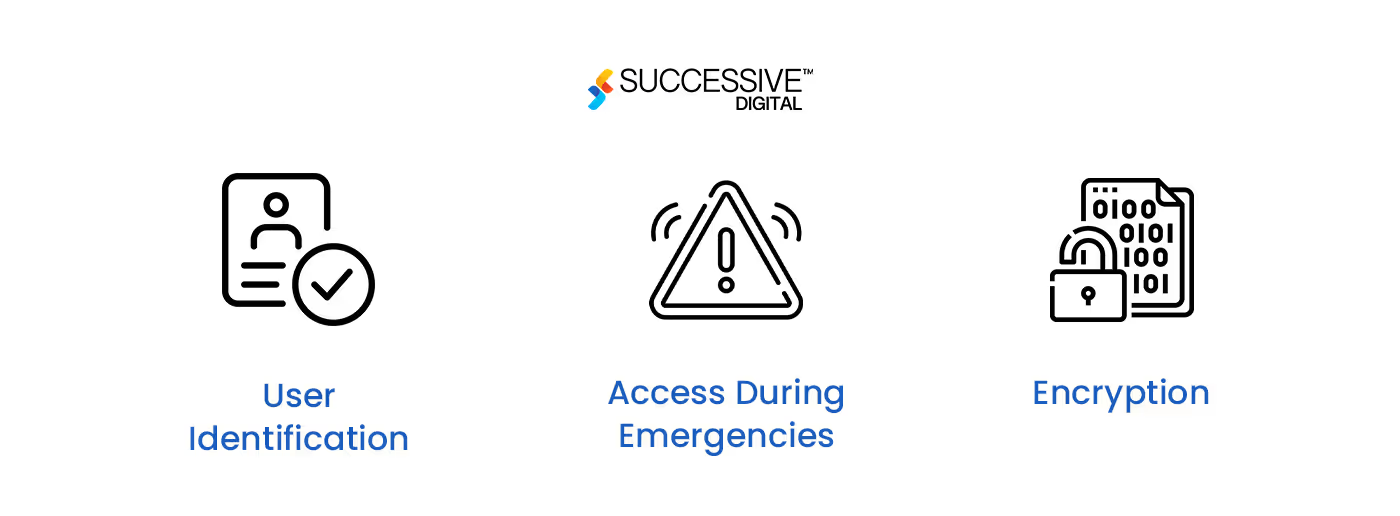
When building a secure healthcare application that your users can trust, it is essential that you understand the features and their complexity. However, the characteristics of HIPAA compliant apps vary as per their types or categories, and there are specific components that you will implement regardless.Let’s take a look at some of the features and how to implement them in the safest way for HIPAA compliance.
User Identification
Implement robust user identification in your HIPAA compliant healthcare app with a password or PIN. Moreover, you can integrate advanced authentication features with a Smart key or Biometric identification.
Access During Emergencies
In healthcare app development, anticipating emergency disruptions is crucial. While not mandated by HIPAA, incorporating provisions for scenarios like natural disasters showcases proactive planning. Ensuring uninterrupted access to critical data during such events reflects a commitment to patient care continuity.
Encryption
Continuous data encryption is imperative for heightened security, whether data is at rest or stored on SaaS or Cloud Servers. Platforms like Google Cloud and AWS, employing Transport Layer Security 1.2, ensure end-to-end encryption. While TLS offers robust security, reinforcing it with Advanced Encryption Standard (AES) encryption is recommended for added data protection.
The Process of Implementing HIPAA Compliant Mobile App
In mobile app development, HIPAA compliance can be a challenging process, which requires the assistance of an experienced healthcare service provider.To become HIPAA compliant, you can follow these steps procedure.
Step 1: Implement Access Controls and Ensure Audit Trails
Restrict access to PHI based on user roles and responsibilities and maintain comprehensive audit logs to track access and changes to PHI.
Step 2: Implement Transmission Security
Fortify data transmission security to ensure PHI’s confidentiality and integrity.
Step 3: Ensure Proper PHI Disposal
Establish secure procedures for the disposal of PHI to prevent unauthorized access or breaches.
Step 4: Automatic Logoff Procedures
Implement automatic logoff features to enhance the protection of PHI when devices are unattended.
Step 5: Evaluate Audit Controls
Regularly assess audit controls to identify areas for improvement and maintain a robust security posture.
Step 6: Apply Encryption
Utilize encryption measures for both data at rest and in transit, bolstering overall data security.
Step 7: Ensure Data Backup and Storage
Implement secure backup procedures to maintain data integrity and safeguard PHI against potential losses.
Step 8: Proof of Authenticity
Establish mechanisms to verify the authenticity of users and data transactions, ensuring the accuracy and legitimacy of PHI.
Step 9: Train Staff and Have a Business Associate Agreement (BAA)
Educate your development and operational staff on HIPAA compliance and security practices. Also, clearly define responsibilities and obligations regarding PHI in the BAA.
Step 10: Ongoing Maintenance
Sustain ongoing maintenance efforts to adapt to evolving threats, technologies, and regulatory changes, ensuring the enduring HIPAA compliance of the mobile app.Want to know more about the process of building a healthcare app? Read our blog on the Healthcare App Development Guide.
Common Pitfalls to Avoid While Developing a HIPAA Compliant Healthcare App
Non-compliance with HIPAA law can occur due to internal leaks or incidents. Even if these violations are unintentional or happen due to a lack of information/knowledge, they can lead to vile consequences. However, these risks can be prevented through data encryption, proper security standards, and access controls.As discussed earlier, HIPAA has strict rules and regulations covering privacy, security, and restrictions on covered entities. You need to avoid the following pitfalls in order to ensure HIPAA-compliant software development.
- Not implementing robust security measures or failing to encrypt data can expose ePHI to potential data breaches.
- Healthcare applications with weak access controls and authentication mechanisms can risk unauthorized access.
- Not being able to follow the requirements and standards regarding the disposal of PHI can threaten the confidentiality and security of sensitive data.
- Security vulnerabilities in healthcare applications can lead to cyberattacks.
- Neglecting the importance of audit logs hinders the ability to detect and respond to security incidents.
How Much Does HIPAA Compliant Healthcare App Development Cost?
The average cost of HIPAA-compliant app development is between $45,000 and $300,000. Many factors impact the cost of building a HIPAA-compliant healthcare app, and based on that, you can decide the budget for healthcare app development.
- App Complexity, including the number of features, functionalities, and interface intricacies.
- Implementing and maintaining security features.
- The cost of integrating additional features and healthcare services.
- Hiring a development team with expertise in healthcare regulations, particularly HIPAA compliance.
- The cost of thorough app testing contributes to the overall development budget.
- Compliance audits, documentation, and updates.
- The choice of development platform (iOS, Android, cross-platform) or cross-platform development.
- Ongoing maintenance and support are crucial for budgeting the app’s long-term success.
- Engaging with legal and regulatory consultants will provide valuable guidance but add to the overall project cost.
Read our blog on Healthcare App Development Costs to know the total cost of building a medical app.
Successive Digital: Your Road to HIPAA Compliant App Development
As the digital healthcare solutions market rapidly expands, many companies invest in healthcare app development services to meet patient needs and establish a competitive edge. Successive Digital is a leading digital transformation company offering healthcare app development services, uplifting the customer experience, and compliant with HIPAA law.Take a look at our latest case of Modernized Legacy Healthcare Applications on AWS Cloud under HIPAA rules and regulations. In this project, our team ensured data is stored, transmitted, and shared for interoperability under HIPAA guidelines, along with smooth and error-free cloud deployments. With our end-to-end cloud solutions, we improved and modernized the infrastructure of our client’s healthcare services available to everyone. We leveraged the latest technology, implemented HIPAA compliance, and established quality control measures to ensure seamless telehealth solutions.
Conclusion
We can conclude that HIPAA was developed to secure the privacy of patient data and safeguard healthcare applications, systems, and businesses in general. Furthermore, any application that falls under HIPAA compliance but is not implemented correctly can face legal repercussions, including massive penalties of a few thousand to million dollars, depending on the size of the security or data breach. Hence, following all these HIPAA procedures and processes for robust healthcare app development is necessary.
FAQs
Is there any certification required to build a HIPAA-secure app?
No, there is no such certification as HIPAA certification, but you need to take HIPAA compliance into consideration while building a healthcare app. This means that your system or application will adhere to all sets and subsets of HIPAA guidelines, and then you will be able to build a HIPAA-secure app. Concerned authorities set such rules and regulations to boost healthcare applications’ data security and infrastructure.
How to make an app HIPAA compliant?
Here are the step-by-step instructions for building a HIPAA compliant healthcare app:Step 1: Define Your Healthcare App Idea:
- Clearly define the purpose and functionality of your healthcare app.
- Identify the specific features that will involve the processing of protected health information (PHI).
Step 2: Choose a Healthcare App Development Service Provider:
- Select a reputable development service provider with experience in healthcare app development.
- Ensure the provider has a good understanding of HIPAA requirements.
Step 3: Check Whether Your Idea Falls Under HIPAA Compliance:
- Conduct a thorough risk analysis to determine if your app falls under HIPAA regulations.
- Understand the specific rules and requirements applicable to your app.
Step 4: Encrypt All Transferred and Stored Data:
- Use strong encryption algorithms for both data in transit and data at rest.
- Implement secure transmission protocols (e.g., TLS) and robust encryption mechanisms.
Step 5: Test and Maintain the App for Security:
- Conduct regular security assessments and penetration testing to identify vulnerabilities.
- Establish a plan for addressing security vulnerabilities promptly.
- Implement security patches and updates regularly.
Which healthcare apps need to comply with HIPAA regulations?
Any healthcare application that store or process ePHI (created, received, used, and/or maintained by covered entities) need to comply with HIPAA regulations. Therefore, defining your app idea and target audience is extremely crucial to determine whether or not it falls within HIPAA compliance.Here are some of the applications subjected to HIPAA regulations, depending on the features and functionalities.
- Telemedicine (Doctor-On-Demand) Apps
- EHR Apps
- Mobile Health (mHealth) Apps
- Medical Imaging Apps
- Prescription Management Apps
- Remote Patient Monitoring Apps
- Healthcare Messaging Apps
- Healthcare Learning and Training Apps
- Appointment Scheduling Apps
- Population Health Management Apps
Can cloud-based healthcare apps be HIPAA compliant?
A cloud-based healthcare app processes and/or stores ePHI for a covered entity or another business associate, and therefore, it must be HIPAA compliant. Stored or transmitted data through cloud service providers like Google Cloud and AWS provide end-to-end encryption and utilize Transport Layer Security(TLS). However, to facilitate an additional layer of security and further strengthen data encryption, a reliable healthcare app development company must implement Advanced Encryption Standard (AES) encryption.
What are the consequences of non-compliance with HIPAA regulations?
The US Dept. of Health and Human Services imposes strict civil and criminal penalties in case of HIPAA violations, ranging from $100 to $50,000 per violation as per the tiers. Therefore, HIPAA compliant mobile app development is mandatory for your healthcare business to avoid any issues in the future.What will happen if you violate HIPAA? It is likely that you will be penalized by OCR financially, depending on the severity of the violation.However, there is a possibility that a business or healthcare service provider was not aware of the HIPAA regulation, resulting in a data breach. In such cases, OCR might resolve HIPAA violations as per voluntary compliance, corrective action, and/or resolution agreement.Hence, covered entities will get to address areas of non-compliance. However, in the case of serious violations or persistent negligence, financial penalties may be imposed.