The integration and advancement of technologies in the healthcare industry have gone more profound than ever imagined. Whether it is medical practices, patient care, or interconnected healthcare systems, the medical sector is continuously progressing from worldwide digital transformation. Moreover, the pandemic, significant demographic shifts, and growing patient demands also fueled this digitalization in the healthcare sector.In 2024, we are witnessing the age of evidence-based medicine, individualized healthcare, and AI-driven patient assistance. Thus, healthcare practitioners, startups, and a reliable healthcare app development company must stay informed about the current trends influencing the healthcare industry.This year, numerous modern technologies and trends are emerging, growing, and driving significant changes in the healthcare industry. Identifying these market shifts is crucial to discovering viable solutions and promising ideas with substantial business potential. Let’s explore the healthcare technology trends of 2024 that can deliver tangible business advantages and that you can start implementing today.
Top Healthcare Technology Statistics for 2024
Traditional healthcare practices lead to costly treatments, time-consuming processes, and unavailable medical care in rural areas. Therefore, professionals and healthcare facilities are implementing advanced technologies to obtain reliable patient data and health measurements, improve staff experience, optimize operational processes, enable faster diagnoses, and drive efficiency.
- In aggregate, healthcare budgets in countries around the world are expected to increase by 10% by 2030.
- The global digital healthcare market is expected to reach $549.7 billion by 2028, projecting a CAGR of 25% from 2023 to 2028.
- The average revenue per user (ARPU) in the digital health market is estimated to be US$60.04.
- In healthcare, the Digital Fitness & Well-Being segment will generate a total revenue value of US$93.56bn in 2024 and holds the largest market share.
- The global healthcare information systems market is expected to reach US$641.98 billion by 2032, exhibiting a CAGR of 8.10% from 2023 to 2032.
- 92% of health systems ensured better consumer satisfaction and engagement achieved from digital transformation.
These statistics highlight the robust growth the healthcare sector is set to witness this year and next year. Moreover, emphasizes the crucial role of digital transformation in driving this expansion. With increasing budgets, substantial market growth, and improved consumer satisfaction, it is clear that digital health solutions will be central to the future of healthcare.
10 Best Healthcare Technology Trends in 2024
1. The Emerging Role of GenAI in Healthcare
GenAI will be particularly impactful over the next 12 months, democratizing access to other transformative AI applications, simplifying implementation, and generating personalized recommendations. It can create synthetic data to train medical AI algorithms without compromising patient privacy or where there is insufficient real-world data. Additionally, GenAI can develop chatbots and virtual assistants to aid at every stage of the patient journey.
GenAI in healthcare applications enables the processing of massive volumes of data, making it a valuable tool. Despite regulatory concerns about patient data, GenAI can significantly aid in clinical diagnoses and advance genomic sequencing for disease detection. On the administrative side, GenAI promises substantial workflow benefits. It can improve efficiency in billing management and operations for insurers and create human-like interactions through chatbots in healthcare customer service. Physician practices can leverage GenAI for care personalization, billing management, payer automation, and provider task automation.
GenAI application in healthcare:
- Clinical Diagnoses: Enhancing accuracy and efficiency.
- Genomic Sequencing: Advancing disease detection.
- Billing Management: Streamlining administrative tasks for insurers.
- Customer Service: Providing human-like interactions via chatbots.
- Care Personalization: Tailoring treatment plans for patients.
- Provider Automation: Automating routine tasks to improve efficiency.
2. Establishing a Connected Care Ecosystem
Wearable, customizable technology like smartwatches has revolutionized personal health routines for over 15 years. Today’s sophisticated smart health devices, which monitor vitals, demonstrate the ongoing demand for seamless and personalized health technologies.This trend will continue to expand this year, promoting healthier behaviors by helping people maintain health routines and closely monitoring improvement. Healthcare providers leverage wearable data to monitor chronic conditions, such as diabetes and heart disease, detecting early warning signs in patients. Remote monitoring provides timely results for at-home recovery and these insights help in developing personalized treatment plans, ensuring optimal patient care in home care settings.
Components of the connected care ecosystem include:
- Wearable Devices: Monitor vitals in real-time (e.g., blood pressure, A1C) and send data to providers.
- Digital Tools: Enhance digital therapeutics, disease screening, patient education, and care navigation.
- Virtual Healthcare Assistants: Guide patients to information and make recommendations.
- IoT-powered Virtual Hospital Wards: Oversee multiple patients, showcasing the shift to holistic remote care.
As this ecosystem evolves, organizations must adapt delivery models, manage reimbursement changes, and measure the clinical and financial ROI of connected care.
3. Telemedicine and Remote Patient Monitoring
Telemedicine and remote patient monitoring are experiencing unparalleled growth in 2024 as they redefine the healthcare industry by bridging the gap between patients and their doctors or caregivers. This trend aims to provide real-time patient and doctor access, enabling preventive measures before medical emergencies occur. Read our blog on telemedicine app development cost to know a complete breakdown of the factors influencing the total estimation of building telemedicine apps.Moreover, these technologies have significantly improved access to medical care in rural areas, reducing healthcare costs while providing better medical facilities remotely. Remote patient monitoring devices, equipped with sensors and wearable technology, track vital signs and health parameters of patients with severe and chronic conditions, aiding in the early detection of health issues.Another technological advancement in healthcare, spurred by the pandemic, is the rise of telehealth. The infrastructure supporting telemedicine has seen substantial improvements, increasing its popularity across various medical specialties, including:
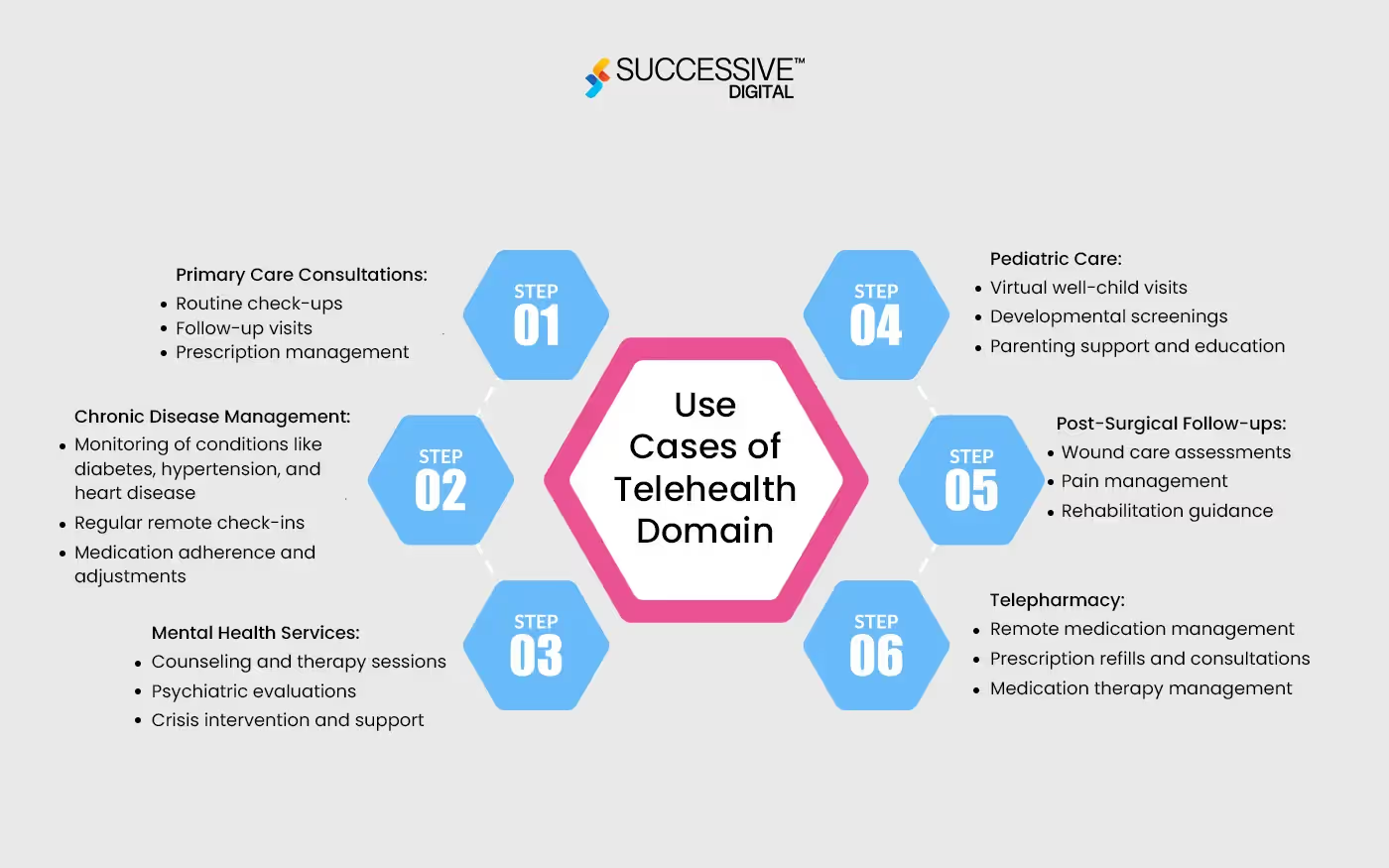
In 2022, the global telemedicine market size was valued at $87.41 billion. This market is projected to reach $286.22 billion by 2030, according to Fortune Business Insights.
4. Personalized Medicine and Genomics
Imagine receiving medical treatment tailored to your individual genetic characteristics – that’s the promise of Precision Medicine and Genomics. Mapping genomic profiles, this approach offers treatments targeting your genetic conditions, making it a rapidly advancing field in molecular diagnostics.This year, Precision Medicine and Genomics are becoming more affordable and accessible. Moreover, advancements in genomics, digital twins, and AI now enable a more personalized approach to treatment, significantly benefiting patients. Thus, these tools offer the highest treatment response with minimal adverse effects.
Benefits and applications include:
- Safe treatments for chronic diseases
- Effective therapies with reduced side effects
- Collaboration between hospitals, clinics, and pharmaceutical companies to create personalized treatment tools and medicines
- Development of customized recommendations for exercise, diet, and ailment management based on individual health data
- Utilization of genomics (study of genes) to tailor treatments
Focusing on individual genetic profiles, these advancements offer safer and more effective treatments, transforming the future of healthcare.
5. Digital Health Tools for More Controlled Care Practices
Advanced digital health tools like telemedicine, remote monitoring, and wearables transform the way healthcare is accessible to patients. Moreover, they ensure patients are in better control of their own health, which drives better patient outcomes. Digital tools prevent illness by establishing minimum data-sharing standards and co-designing solutions with patients. Additionally, addressing social determinants of health and ensuring patients are informed. Data processing and sharing enhance online health services, providing citizens with improved self-care.
Examples of Digital Health Tools:
- Mobile Health Apps
- Electronic Health Records (EHRs)
- Digital Therapeutics
- Health Information Exchange (HIE)
- E-prescribing
- Medical Imaging Devices
6. Cloud Hosting and Data Storage
Connected healthcare systems are increasing data availability, and AI/ML technologies are enhancing data analytics. However, these advancements can be hindered by substandard data practices. Therefore, stakeholders must store and share electronic health data in an understandable manner across various healthcare systems and settings. Fully integrated and interoperable health data enable healthcare providers to leverage advanced analytics, identifying trends and patterns that can improve medical care and population health outcomes.Cloud hosting offers better security for storing data. However, it is important to align with government regulations regarding protected health information. With multiple data streams, many health organizations face challenges such as segmented datasets and immature data processes. Overcoming these challenges is essential for healthcare businesses to remain competitive, drive growth, and assure patients and regulators of their secure and impactful data practices.
Additional beneficial features include:
- Security mechanisms
- Location services
- Appointment management
- Secure Messaging
- Healthcare provider reviews
- Visit history
- Integration with wearables
Certain applications may also require storing fitness data from consumer devices like Google Fit and Apple HealthKit. Securely and efficiently maintaining these integrations can significantly benefit both patients and healthcare providers.
7. Integrated Diagnostics Supporting Multi-Disciplinary Collaboration
Personalized diagnoses and treatment plans are crucial for improved patient care and clinical outcomes. They establish a deeper connection between patients and their healthcare providers. This enhances their ability to collaborate efficiently and effectively. Therefore, healthcare app development services implement modern informatics tools to consolidate and process diagnostic data from sources like imaging, digital pathology, and genomics.
The collected diagnostic data, along with the clinical data from EHR, support multi-disciplinary collaboration, providing many applications, such as:
- Directing clinical action
- Enhancing quality of life
- Reducing healthcare costs
- Optimizing resource utilization
- Ensuring easier data exchange among healthcare specialists
- Improved patient outcomes
Real-life examples of integrated diagnostics supporting multi-disciplinary collaboration include:
- Cancer Treatment: Enhanced data sharing allows oncologists, radiologists, and pathologists to collaborate more effectively. This ensure precise and timely cancer diagnoses and treatment plans.
- Chronic Disease Management: Cardiologists, endocrinologists, and primary care physicians can access and share patient data seamlessly.
- Genomic Medicine: Geneticists and clinicians can integrate genomic data with clinical information to provide tailored treatment options based on a patient’s genetic profile.
- Better Feedback Loop: Specialists gain better insight into the consistency of their findings, establishing a continuous feedback loop.
8. AI/ML-based Medical Diagnostic Devices and Optimized Operations
With technological advancements happening each year, AI and ML algorithms are becoming more sophisticated. This enables healthcare providers to identify diseases accurately and provide curated treatments. Moreover, they make healthcare practices more efficient, personalized, and accessible.AI benefits nearly every aspect of healthcare, from patient communication and surgical assistance to drug development. Here are some specific use cases:
Healthcare Data Management:
- Document Processing: Automating document processing and electronic health records (EHRs).
- Medical Imaging and Genomics: Analyzing EHR data to identify patterns and improve decision-making.
- Wearable Device Data: Streamlining workflows and enhancing documentation accuracy.
Diagnosis and Drug Discovery:
- Protein Structure Prediction: AI tools accurately predict protein structures, aiding drug discovery.
- Drug-Target Binding: AI and ML algorithms forecast binding affinity between drugs and targets, outperforming traditional models.
- Whole Slide Image (WSI) Analysis: AI processes WSI using computer vision and convolutional neural networks, reducing diagnostic time.
Optimized Operations:
- Diagnostic Imaging: AI integration in CT systems automates radiographers’ tasks, allowing more focus on patients.
- Cardiac Ultrasound: AI simplifies cardiac ultrasound through 3D quantification and modeling.
- Generative AI: Reduces administrative burdens and enhances operational efficiencies with automated documentation and patient visit summarization.
Patient Assistance:
- Virtual Assistants and Chatbots: Provide treatment advice, book appointments, remind patients to take medications, and offer companionship.
9. Augmented Reality (AR) and Virtual Reality (VR) in Healthcare
In medical training and the educational sector, Augmented Reality (AR) and Virtual Reality (VR) technologies offer an immersive experience. With 3D interactive visual learning, healthcare students and professionals can experience interactive anatomy lessons, surgical procedures, and even patient consultations. Thus, medical students and practitioners can gain hands-on experience with precision.AR/VR tech are also being used for patient education and therapy. Moreover, these technologies enable more customized, effective, and patient-centric care. Hence, patients can envision difficult medical concepts and their treatments more actively.Here are some of the benefits the healthcare industry is getting from AR and VR technologies in the current year:
- Enable healthcare providers to share visual information and guidance with patients in real time. AR-enabled devices provide healthcare professionals with the ability to guide patients through specific procedures virtually.
- Enhance learning experiences for medical students and professionals.
- Provide interactive, immersive simulations of medical procedures, anatomy, and physiology or user instructions.
- Craft interactive exercises for patients in rehabilitation and physical therapy settings.
10. Improved Interoperability for Better Monitoring and Data Security
With the increasing demand for data security and patient privacy, healthcare service providers focus on data interoperability through cloud computing in the healthcare industry. In medical applications, it is essential to store patient data confidentially at the same time making medical records accessible for healthcare providers.Implementing remote servers to store, manage, and process healthcare-related data can ensure better scalability, flexibility, and security. The cloud computing environment introduces data security architecture with a robust, dynamic, and feasible Multi-Factor Authentication (MFA) scheme. This safeguards your application better against today’s most modern means of attacks.Cloud computing in the healthcare industry involves using remote servers accessed via the internet to store, manage, and process healthcare-related data rather than relying on an on-site data center or personal computer hosting.Adhering to healthcare regulations adds an extra layer of complexity for healthcare providers.They must adhere to various data privacy and security regulations and consider the specific guidelines of different countries in which your application is operating for patient data storage and handling. With HIPAA-compliant app development and cloud hosting solutions, you can ensure a secure and seamless healthcare operation dealing with sensitive electronic health records (EHR).
Future Healthcare Trends Technologies and Innovations
As we enter 2024, the digital transformation in healthcare is accelerating, unlocking unprecedented growth opportunities. With the evolution of data democratization, digitalization, and collaboration, healthcare providers are expected to seek solutions that enable more streamlined, seamless, and secure data sharing and communication.Patients, on the other hand, will demand more personalized and interactive experiences from modern healthcare solutions that cater to their specific needs and problems. Consequently, advancements in intelligent technologies such as artificial intelligence, machine learning, and extended reality will continue to play a crucial role in enhancing the quality and efficiency of healthcare. Moreover, the potential of GenAI in healthcare is vast, and its applications are set to grow, making it a critical focus for the future of healthcare innovation.Those were the technology and trends that are shaping the future of healthcare in the coming months and beyond. To navigate the future momentum in the healthcare industry, one must be proactive in redefining it. Stay ahead of these trends by exploring our healthcare app development services. Contact us to start with a conversation, followed by a clear plan for action!