With Chatgpt’s adaptation, businesses started exploring the possibilities of Generative AI to improve customer service and operational efficiency. Whether healthcare, commerce, or media, almost every industry utilizes Gen AI. But have you seen the predominant growth of BFSI after utilizing Gen AI for its day-to-day business operations?
Gen AI has become a valuable technology for the BFSI industry, offering advantages that redefine how financial operations are done and customer services are delivered. By integrating Generative AI in BFSI, the industry has streamlined operations, reduced errors, automated repetitive tasks, and optimized workflows. It has profoundly improved decision-making, customer engagement, and productivity.Are you looking to know more about the potential of Generative AI in BFSI industry?– Let’s uncover it with this blog. This blog will explore the different segments of Gen AI for the BFSI industry and what impact it creates in the long run.
What is Generative AI?
Generative AI is an advanced version of artificial intelligence that can create various forms of content, including audio, text, imagery, and synthetic data. It was first introduced in chatbots in the 1960s, but it became popular with the introduction of Generative Adversarial Models ( GANs). Gen AI works on a prompt that could be text, a design, an image, musical notes, or any other input AI systems can take. Different AI algorithms return content in response to the prompt submitted.Previous versions of Gen AI were complicated and used to accept data via APIs. However, with technological advancements in natural language processing in the past few years, Gen AI can accept requests in plain language. Then, you can customize the results further with feedback about the style, tone, or any other elements you want to reflect in the generated content. Not only this, Gen AI is evolving with every passing day—it is opening new possibilities with the introduction of each Gen AI model. Want to know more about Gen AI models and what is the impact of Generative AI in BFSI ? Read further.
Types of Generative AI Models
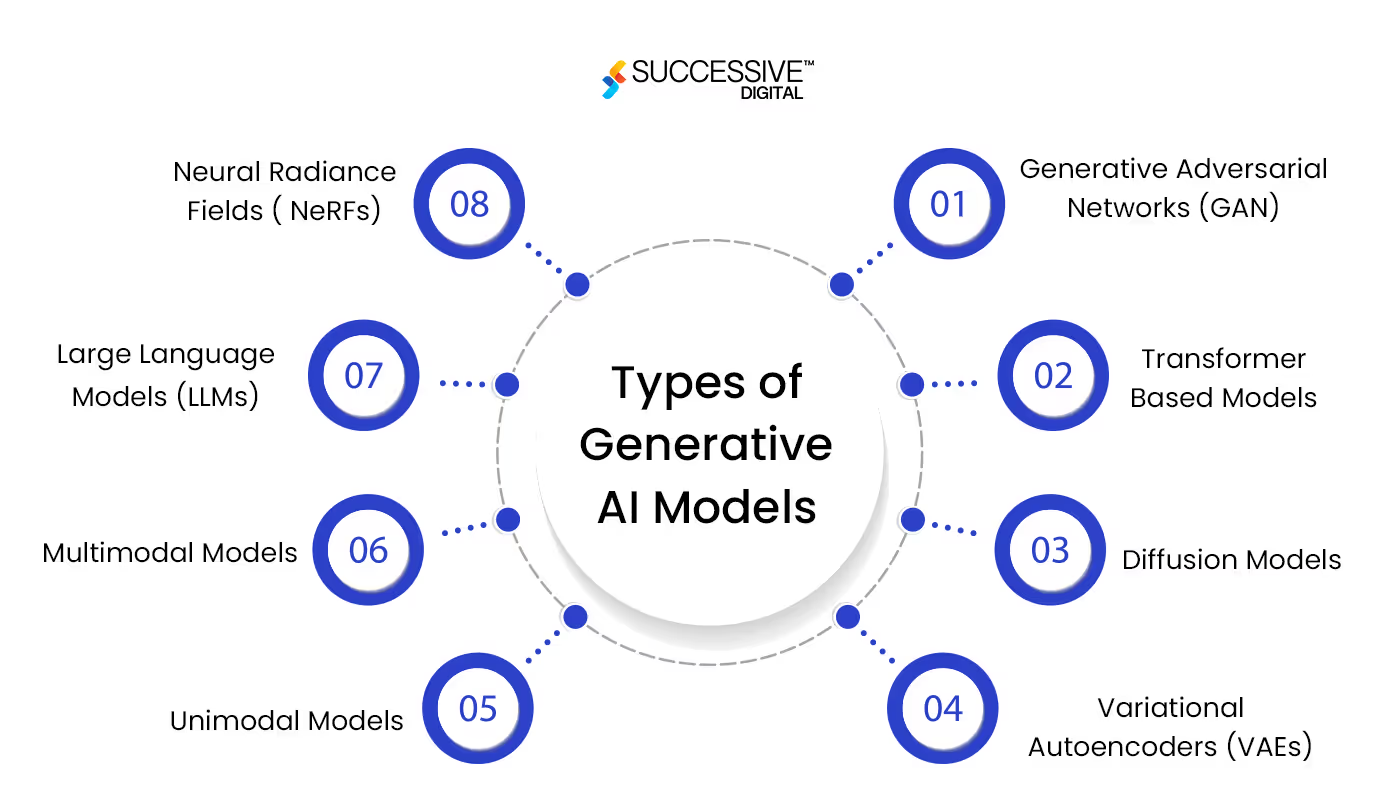
Generative AI models have emerged as a prominent solution with a high impact on every industry- from enhancing healthcare operations to personalizing and securing financial transactions. Every Gen AI model is different and has their versatile way of approaching complex problems and tasks. Let’s explore the versatile Generative AI models with specific applications and domains:
- Generative Adversarial Networks (GAN)
GANs are ideal for synthetic data generation and image duplication. Generative Adversarial Networks are based on convolutional neural networks. They work on two neural networks – a generator and a discriminator which work in opposition to deliver realistic results. For example, GANs can utilize living images of non-existing faces in facial recognition systems.
- Transformer Based Models
Transformer-based Models are best suited for code completion and text generation. They are based on neural network architectures that have transformed natural language processing (NLP). These models learn from tracking patterns and establishing relationships in sequential data. Generative Pre-Trained Transformers (GPT-3 &4) and Bidirectional Encoder Representation from Transformers (BERT) are the most known examples of Transformer-Based Models.
- Diffusion Models
Diffusion models, also known as diffusion probabilistic models or score-based generative models, are ideal for image generation and synthesis. These models integrate random noise into the data and then gradually reverse the process to transform the random noise into a structured output. They are capable of media generation, creating high-quality images or realistic scenes and objects. Google’s Imagen and DALL-E 2 are examples of diffusion models.
- Variational Autoencoders (VAEs)
Variational Autoencoders are explicitly utilized to capture the underlying probability distribution of the given dataset and generate realistic samples as the output. They are built with an encoder and a decoder, which are intended for data compression and reconstruction. These models can be utilized to get a probabilistic manner for describing an observation in latent space. They are widely used for data compression and synthetic data creation. VAE-GAN is one of the most well-known examples of VAEs.
- Unimodal Models
The unimodal models operate on a single type of data—i.e., (text only or image only). They are designed to work in a single input format. The frequency of unimodal has only one peak. They focus on image synthesis, text generation, or audio generation based on a specific input data type. WAVEGAN is one such example of an unimodal model.
- Multimodal Models
Multimodal models operate on the fusion and analysis of data from multiple input types or modalities, such as text, audio, codes, video, or sensor data. This fusion creates a comprehensive data representation for better performance on various machine-learning tasks. These models are designed to accept various types of inputs and prompts; GPT-4 is a perfect example of a multimodal model, as it can process both text and images. It can provide descriptive text for images or vice versa.
- Large Language Models (LLMs)
Large Language Models (LLMs) are best suited for language-related tasks, such as text generation, question-answering, and language-based understanding. They are trained on huge datasets, making them capable of understanding and creating natural language and other forms of content to perform a versatile set of tasks. Meta’s Llama models and Google’s BERT are a few examples of LLMs.
- Neural Radiance Fields ( NeRFs)
Neural Radiance Fields are best suited for generating 3D imagery based on 2D image inputs. NeRFs utilize a neural aspect called multilayer perceptron (MLP). It is a fully connected neural network architecture that is used to create a representation of a 3D scene. These models require retraining for each unique scene. This model enables learning of novel view synthesis, scene geometry, and the reflectance elements of the scene. NeRFs are highly potent in video production, computer graphics, and product design. MetaHumans and Holodeck are two examples of NerFs.
Generative AI in the BFSI Industry: An Overview
Gen AI is powered by and operational on data. The BFSI industry is highly dependent on data, so leveraging this advanced technology is a natural fit. Generative AI in BFSI has become a valuable technology that businesses can’t overlook. Gen AI has unmatched potential to transform decision-making and improve business performance.Gen AI-powered models can review large data sets in fractions of time, helping executive leaders predict trends and enabling real-time monitoring and forecasting.
Generative AI in the banking and financial industry enables augmented autonomous finance operations. Activities like invoicing and payments can be automated by extracting supplier names and invoice numbers in real-time, mitigating the risk of payment delays or human error from manual data entry, and helping create internal and external financial reporting. Generative AI enables automation in reconciliations, journal entries, and economic consolidation. Let’s understand what impact Generative AI can create on banking, financial services and insurance:
-
Generative AI in Banking
Integrative generative AI in banking operations can significantly improve customer experience, reduce manual work, and help with cost optimization. Generative AI use cases in banking include:
- Improved Customer Service Delivery
- Fraud Detection
- Risk management
- Personalized Banking Services
-
Generative AI in Financial Services
Generative AI in finance can improve decision-making abilities, personalize customer engagement, and improve overall business performance. Generative AI applications in finances include:
- Personalized Investment Strategies
- Market Trend Prediction
- Customer Relationship Management
- Ensured Regulatory Compliance
-
Generative AI in Insurance
Integrating Generative AI in insurance can help optimize claim processing, improve load underwriting, and help customers find the right insurance plan by analyzing their investing patterns. Generative AI use cases in insurance include:
- Loan Underwriting
- Claim Processing
- Personalized Wealth Management
- Financial Awareness
Read this blog to learn more about – AI in the Fintech – How Can You Enhance Your Fintech Platform With AI?
Applications of Generative AI in BFSI
Enhancing Customer Experience
-
Gen AI-Powered Chatbots
The BFSI industry often faces challenges in delivering timely customer services and personalized experiences. Traditional customer service leads to long wait times and is prone to human errors. Utilizing Gen AI-powered bots can help your business tackle such challenges.These chatbots can handle customer queries, providing instant, accurate, and personalized responses. These chatbots are trained on extensive data sets and utilize natural language processing (NLP) to understand and respond to customer needs effectively. Generative AI in BFSI significantly reduces wait times and enhances customer satisfaction by providing consistent and reliable service.
-
Tailored Financial Advice
Modern businesses need modern solutions like personalized customer engagement and product recommendation platforms to meet complex financial consumer queries. As customers are already aware of financial investments such as stocks, mutual funds, and insurance, they expect a higher return and secure investment. Henceforth, customers now seek personalized financial advice to manage their investments, savings, and expenditures. Integration of Gen AI capabilities within financial systems can help businesses analyze extensive customer data to generate personalized financial guidance. AI systems can generate specific recommendations by analyzing individual customer profiles, including spending habits, market data, investment patterns, and economic goals. Generative AI applications in finance systems and solutions allows institutions to provide advice that aligns with each customer’s unique requirements, helping them make responsive financial decisions.
Fraud Detection and Risk Management
-
Real-Time Fraud Detection
With the adaptation of digital transformation, fraudulent actions in the BFSI industry are becoming more prevalent. Traditional systems are unable to detect and prevent them in real-time. Employing Generative AI models can improve fraud detection by examining transaction patterns and spotting anomalies that suggest fraudulent behavior. These models use potent algorithms to evaluate and interpret vast amounts of transaction data, learning from past trends to detect odd or suspicious activity. These AI systems can detect and minimize fraud in real-time by continuously upgrading their understanding in response to fresh inputs.
-
Predictive Risk Assessment
Traditional approaches frequently fail to predict risks as they are unable to analyze vast sets of data. Risk assessment is crucial for financial businesses. Integrating Gen AI enhances risk assessment by evaluating vast amounts of past data and detecting patterns indicating potential future difficulties. These AI systems use powerful machine learning algorithms to provide forecasts and risk scenarios, allowing organizations to anticipate and handle possible challenges before they materialize. Generative AI in BFSI has a proactive approach; which significantly enables financial institutions to take preventative measures, improving economic stability and regulatory compliance.
Automation of Financial Processes
-
Routine Task Automation
Financial processes include time-consuming and error-prone repetitive tasks, such as data entry, generating reports, and regulatory complaints. Gen AI integration can automate these mundane operations using algorithms to process data, provide precise reports, and maintain regulatory compliance. This automation improves processes and reduces the possibility of human error. By automating these repetitive and monotonous processes, Gen AI enables employees to focus on more strategic activities, enhancing overall efficiency and productivity.
-
Efficiency and Cost Savings
Financial institutions have substantial operating costs, particularly labor-intensive and inefficient back-office activities. Generative AI in BFSI can help solve this problem by automating various processes, including transaction processing, data management, and compliance monitoring. By utilizing advanced algorithms to accomplish these jobs, AI minimizes the need for manual intervention, minimizing operational expenses. This automation streamlines procedures and helps institutions deploy resources better, resulting in significant cost savings and a more agile and responsive operational model.
Advanced-Data Analytics
-
Predictive Analytics and Decision-Making
Making informed business decisions demands precise predictions and insights, which is tough with traditional data analysis approach. Generative AI in BFSI improves this capability by using predictive analytics to provide more detailed insights into market trends, customer behavior, and financial forecasts. AI models can find trends and accurately forecast developments by evaluating massive amounts of historical and real-time data. This allows financial organizations to make more confident data-driven decisions, optimizing strategies and boosting accuracy.
-
Insights from Unstructured Data
Financial businesses handle massive amounts of unstructured data, such as emails and social media interactions, which are complex to evaluate using traditional approaches. Generative AI works on extensive data; it can solve this problem using natural language processing (NLP) and machine learning techniques to process and comprehend unstructured input. These AI systems utilize deep learning methods to understand the data’s context, sentiment, and essential themes. Generative AI in BFSI can help businesses to find hidden patterns and trends, allowing them to make better informed and strategic decisions. This skill improves their ability to extract valuable insights from complex data sets.
Benefits of Generative AI in BFSI Industry
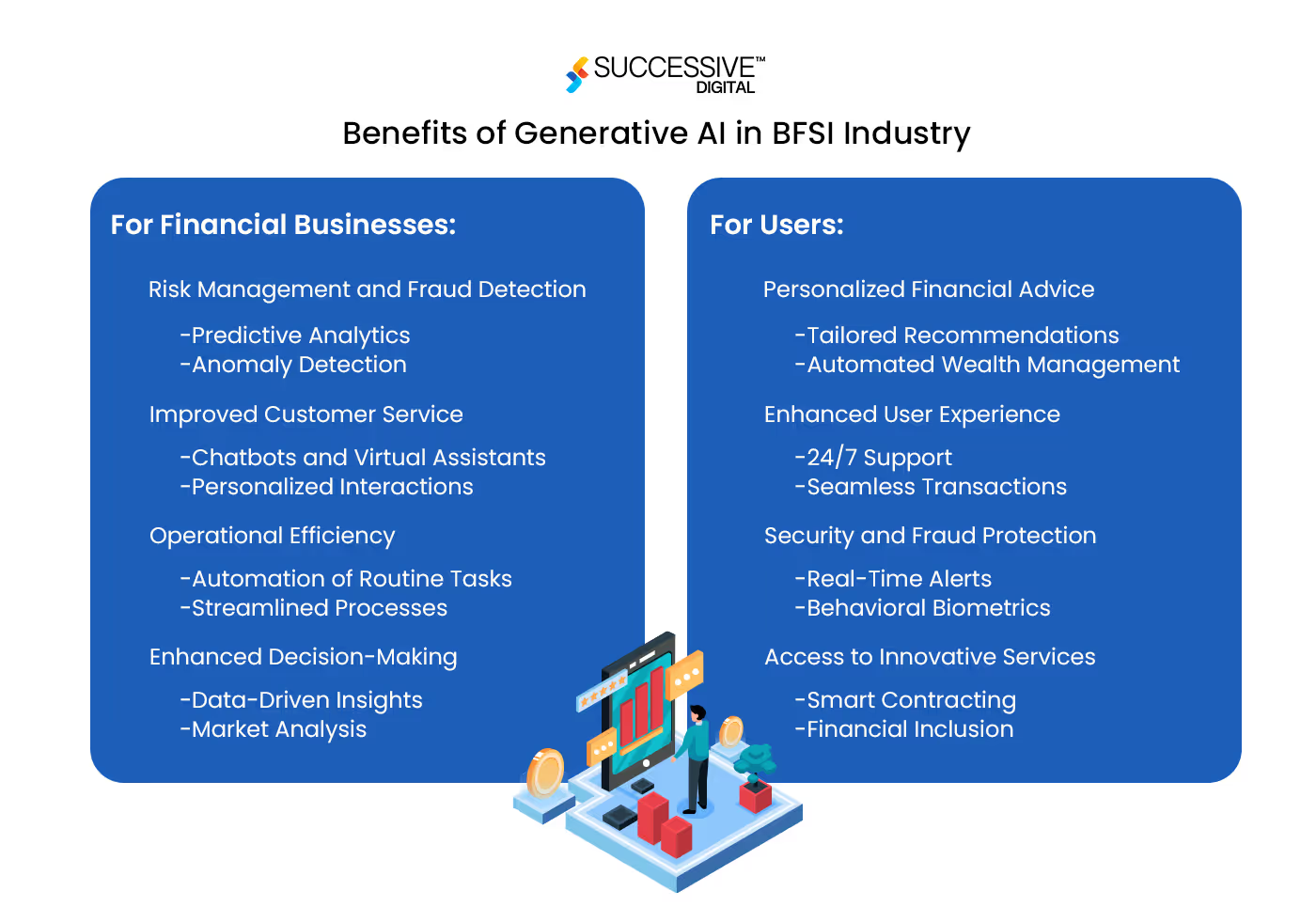
For Financial Businesses:
-
Risk Management and Fraud Detection
Generative AI analyzes extensive data sets, understands patterns, and detects real-time errors. It helps via-
- Predictive Analytics: Forecast potential risks and market changes.
- Anomaly Detection: Identify and address unusual transaction patterns.
- Improved Customer Service
Integrating Gen AI into your financial business helps improve and deliver a satisfactory customer experience. It helps via-
- Chatbots and Virtual Assistants: Provide instant, accurate support.
- Personalized Interactions: Tailor responses to individual customer needs.
- Operational Efficiency
To effectively run a business, one has to streamline business operations. By integrating generative AI, financial institutions can improve their operational efficiency via-
- Automation of Routine Tasks: Streamline data entry and reporting.
- Streamlined Processes: Enhance overall workflow and reduce costs.
- Enhanced Decision-Making
Now-a-days business operations are backed by data, generative ai enables data-driven decision making via-
- Data-Driven Insights: Gain deeper understanding of market trends.
- Market Analysis: Make informed strategic decisions based on comprehensive data.
For Users:
-
Personalized Financial Advice
Modern customers seek customization, Generative AI in BFSI enables personalized financial advice via-
- Tailored Recommendations: Receive customized investment and savings guidance.
- Automated Wealth Management: Manage portfolios with AI-driven strategies.
- Enhanced User Experience
Generative AI integration improve user experience via-
- 24/7 Support: Access continuous customer service.
- Seamless Transactions: Ensure smooth and efficient transaction processes.
- Security and Fraud Protection
Traditional approaches are not enough capable to provide real-time security and protection. Gen AI integration can do it via-
- Real-Time Alerts: Get immediate notifications about suspicious activities.
- Behavioral Biometrics: Enhance security with advanced identification methods.
- Access to Innovative Services
As Generative AI automates many mundane tasks, it opens room for innovation. It enables-
- Smart Contracting: Utilize AI for efficient contract execution.
- Financial Inclusion: Expand access to financial services for underserved populations.
Challenges and Considerations of Generative AI in BFSI
Generative AI is a new technology with its considerations and challenges, just like any other technological advancement. Integrating Gen AI can bring up challenges like biases, numerical accuracy, security considerations, etc. Let’s have a look at the challenges of integrating Generative AI in BFSI industry:
1. Increased Risk of Fraud and Deception
Generative AI is powered by data. Fraudsters can exploit this data, making it easier to engage in fraud and deception. Banks and financial institutions must contend with:
- As generative AI models like ChatGPT become more advanced, they can create highly persuasive phishing emails and impersonate individuals convincingly over the phone.
- Generative AI can be used to develop fake browser extensions, apps, or malware, increasing the risk of data breaches.
- The rise in attacks could lead to more frequent data breaches or blackmail attempts, threatening to expose sensitive customer information.
Mitigation Strategies:
- Implement robust cybersecurity measures to protect AI systems from hacking attempts.
- Train staff to recognize phishing attempts and AI-generated fraud.
- Regularly update and patch systems to address potential vulnerabilities.
2. Data Privacy and Security Concerns
Generating customer-related content using AI raises significant data privacy concerns. Sensitive information could easily be exposed or mishandled, posing risks to customers and institutions.
Mitigation Strategies:
- Establish strict data handling and privacy policies to safeguard sensitive information.
- Employ advanced encryption techniques to protect data at rest and in transit.
- Conduct regular audits and assessments to ensure compliance with data protection regulations.
3. Bias and Fairness Issues
AI algorithms can inherit biases from the data on which they are trained, leading to discriminatory outcomes in lending, hiring, and other areas. The complexity of AI models makes it challenging to understand their decision-making processes.
Mitigation Strategies:
- Actively identify and address biases in training data and algorithms.
- Implement transparent AI practices to explain decision-making processes to customers and regulators.
- Regularly review and update AI models to ensure fair and equitable outcomes.
4. Regulatory Compliance Challenges
The financial services industry is highly regulated, and the adoption of generative AI will likely add to regulatory scrutiny. Institutions must navigate evolving regulations related to data privacy, consumer protection, and AI ethics.
Mitigation Strategies:
- Stay informed about regulatory changes and ensure compliance with AI-focused regulations.
- Foster collaboration among legal, IT, and compliance teams to navigate complex regulatory landscapes.
- Utilize AI tools to monitor and adapt to new regulatory requirements in real time
5.Integration with Existing Systems
Integrating generative AI into existing BFSI infrastructure can be complex. It requires careful planning to ensure seamless functionality and compatibility with legacy systems.Mitigation Strategies:
- Conduct thorough compatibility assessments before integrating AI solutions.
- Use phased implementation approaches to minimize disruptions.
- Train IT staff to manage and troubleshoot integration issues effectively.
Real-World Gen AI Utilization Examples
Smart business owners have already started utilizing Generative AI for better business outcomes. Here are a few leading names utilizing Gen AI –
- JP Morgan Chase
JP Morgan Chase utilizes generative AI to create personalized investment plans and mitigate risks more effectively. By analyzing vast amounts of market data, generative models can identify patterns and predict market movements, significantly helping optimize portfolios. They have an intelligence platform powered by Gen AI called Contract Intelligence (COiN). It uses AI to analyze legal documents and extract essential data.
- Morgan Stanley
Morgan Stanley uses generative AI to provide personalized wealth management services. By analyzing clients’ financial data, generative AI models can create customized investment strategies tailored to individual risk profiles and financial goals. This personalized approach enhances client satisfaction and retention. Morgan Stanley’s AI uses generative models to analyze market trends and generate insights.
- Well Fargo
Wells Fargo utilizes generative AI to improve customer service through advanced chatbots and virtual assistants. These AI-driven tools can handle a wide range of customer inquiries, from account information to transaction details, providing quick and accurate responses, and freeing up human agents for more complex issues. By continuously analyzing transaction patterns, the AI models can generate profiles of normal behavior and flag anomalies, helping to identify and prevent fraudulent activities in real-time.
- RBC Capital Market’s Aiden
RBC Capital Markets has developed a Generative AI-powered trading platform, Aiden. It uses deep reinforcement learning to analyze vast market data and execute trades. The platform learns and adapts to market conditions, optimizing trading strategies to enhance performance. It also uses gen AI for predictive analytics, providing traders with advanced market forecasts.
Generative AI Future Trends You Should Not Miss
-
More Power to Virtual Agents
Gen AI has transformed business operations by expanding the capabilities of virtual agents beyond simple chatbot interactions. With advanced technologies and market data, these systems are continuously improving. T he modern AI systems automate tasks such as loan credit analysis, application submission, making reservations, and connecting various services.Multimodal AI is a key enabler, allowing users to interact with AI in more intuitive ways. Innovations like Be My Eyes, which uses AI to help visually impaired users interact with their environment, highlight the potential for AI to provide real-time, context-aware support, marking a significant trend in the evolution of generative AI.
-
Hyper-Personalization of Financial Services
Hyper-personalization is the next big thing in the BFSI industry, fueled by technological developments in generative AI. This method analyzes detailed customer insights to provide highly personalized financial services and products. Generative AI in BFSI enables banks to handle real-time data and customer interactions, resulting in ultra-precise, context-aware messages and recommendations. To achieve hyper-personalization, banks must prioritize three key areas
- gaining a thorough understanding of their customers through advanced data integration and analysis,
- using predictive analytics to anticipate customer needs and
- utilizing conversational AI to provide real-time, personalized interactions.
This trend reflects a substantial shift toward providing deeply tailored customer experiences, eventually improving consumer engagement and competitive positioning in the financial services industry.
-
Real-Time Regulatory Compliance
Real-time compliance management is developing as a significant future trend in the banking, financial services, and insurance (BFSI) business due to its ability to solve the sector’s complicated regulatory environment and the growing demand for agility. With increased regulatory scrutiny and growing compliance standards, BFSI businesses must build systems that provide immediate visibility into compliance status and can quickly respond to changes.Real-time compliance management uses modern technology such as AI and machine learning to continually monitor transactions, detect abnormalities, and enforce policies, reducing risks and maintaining regulatory compliance. This proactive strategy not only improves operational efficiency and lowers the likelihood of compliance breaches, but it also builds trust with clients and regulators by demonstrating a commitment to strong and agile compliance standards.
-
Ethical AI Frameworks
Ethical AI frameworks are emerging as an essential future trend in the BFSI business as organizations prioritize ensuring that their AI systems perform transparently, fairly, and responsibly. As the use of Generative AI in BFSI increases in credit scoring, fraud detection, and customer service expands, so does the need to address potential biases, protect data privacy, and assure regulatory compliance.Implementing ethical AI frameworks helps BFSI organizations create confidence with consumers and regulators by establishing explicit norms for responsible AI use, minimizing the risks associated with algorithmic bias, and encouraging transparency in decision-making. This trend meets rising customer and regulatory expectations and promotes long-term corporate sustainability by encouraging ethical practices and improving the integrity of AI-powered operations.
Conclusion
Generative AI is a crucial technology for all industries. The adoption of Gen AI is a strategic decision-making process for organizations. Gen AI implementation includes fine-tuning and training the existing models for the specific business use case. Integrating Gen AI and getting desired outputs is complex and requires enough time and effort. Successive Digital is a renowned Gen AI consulting company specializing in Gen AI solutions and working with modern technologies. Our developers can help you create a customized Gen AI-powered solution that can automate tasks, resolve real-time issues, and improve customer experience. We have collaborated with various sectors- healthcare, media, agritech, or fintech to create advanced business solutions that help streamline business processes and promote growth. Collaborate with an AI strategy consulting company like us, and let us help you improve your customer service delivery experience.