When did you last search, buy, or sell something using your smartphone? Maybe yesterday night or this morning. Thanks to the digitalization of modern life, consumers worldwide now profit from the perks of online transactions, primarily through eCommerce applications available on the go on smartphones.As global internet access and smartphone adoption rapidly increases, consumers are more inclined towards online shopping. Due to this, mCommerce has seen a meteoric rise in popularity. In 2022, retail e-commerce sales were estimated to exceed 5.7 trillion U.S. dollars worldwide, and this figure is expected to reach new heights in the coming years.
An eCommerce solution development for mobile platforms presents an opportunity for businesses of all sizes and types to draw a significant customer base for their company. If you want to integrate an eCommerce solution into your business but for mobile-focused users, this guide is for you. In this blog post, we will explain what an eCommerce mobile app is, alongside other necessary information you need to know regarding eCommerce mobile app development.
Table Of Content
- What Is An eCommerce Mobile App?
- What Is An eCommerce App Development?
- How Can An eCommerce App Development Benefit Your Business?
- Facts About eCommerce App Market Growth
- Types Of eCommerce Mobile Apps
- 5 Things To Consider Before eCommerce App Development
- List Of Technology Stack For eCommerce App Development
- How To Develop An eCommerce App From Scratch?
- List Of Top eCommerce App Development Features
- Top eCommerce App Development Trends
- How Much An eCommerce App Development Cost?
- How Can Successive Digital Help You To Create An eCommerce App?
What Is An eCommerce Mobile App?
A mobile commerce application is a software application designed by an eCommerce app development company to help businesses to engage with customers through mobile devices and enable them to shop directly from their brand. These mobile applications served as an additional sales channel for businesses to reach customers who prefer to shop from their smartphones or tablets. An eCommerce mobile application can be developed for different platforms, including Android and iOS, since both are the leading mobile platforms in the world.
Using a mobile commerce application, a retail business can offer a range of eCommerce app features such as product catalogs, shopping carts, secure payment options, order tracking, customer support, and others that simplify the user’s online shopping experience in all ways possible. You can also optimize your mobile application to support personalized recommendations and promotions based on your user’s browsing and purchase history that resonate well with their personal choices and preferences.
What Is An eCommerce App Development?
When you want to build an ecommerce app for a mobile platform, it is important to navigate the difference between an ecommerce app and an ecommerce mobile app since both applications are different in some ways. An eCommerce mobile app development is the process of developing an application specifically for mobile devices.These applications are designed keeping in mind the user experience, functionality, design, and performance based on touch-based input and small screens. Additionally, an eCommerce mobile application is required to be optimized for varying mobile devices and specifications for performance and resource usage. By developing a mobile commerce application for your retail business, you can also leverage mobile native functionalities for better user engagement and satisfaction, such as location-based services, push notifications, mobile payments, and others.
How Can An eCommerce App Development Benefit Your Business?
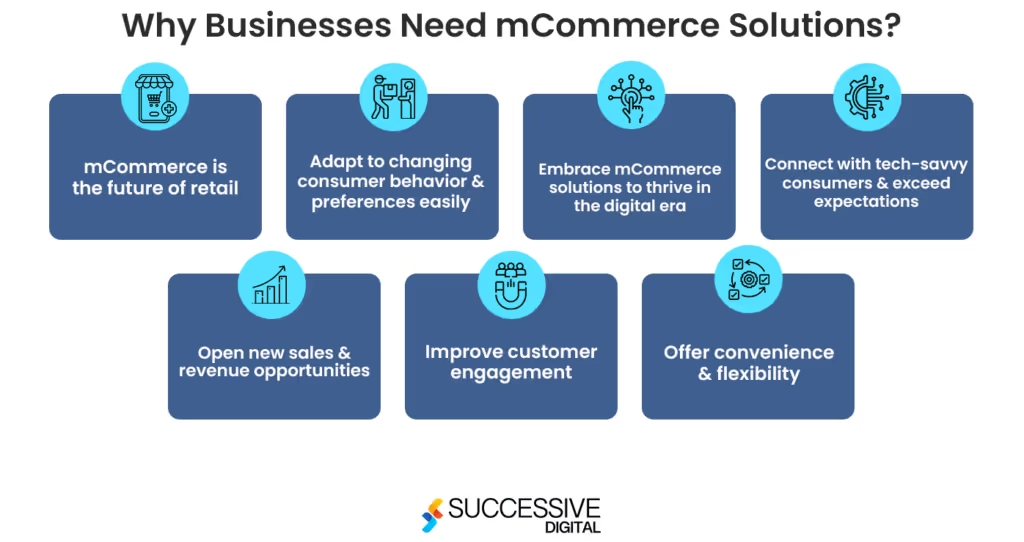
The mCommerce industry is growing fast, and it’s high time to initiate mobile application development for your eCommerce or retail business with an experienced mobile app development company if you don’t have one. There are ample opportunities that a mobile application can help you unlock. Let’s check them in detail.
1. Provide A Convenient Customer Experience
Having a mobile application for your eCommerce business will help you provide a convenient experience to your customers. By utilizing an intuitive user interface, your customers will be able to navigate around all the products you have on offer irrespective of the time of the day since a mobile application is more handy than a website.
2. Personalized User Experience
The approach of eCommerce mobile applications is based on putting the customer’s needs first. By leveraging artificial intelligence, eCommerce mobile applications collect customer behavior and create curated discounts and recommendations that increase users’ likelihood of purchasing.
3. Improved Purchase Process
It is becoming increasingly common to use mobile apps instead of eCommerce websites because of their convenience. Considering all the aspects of the shopping process, from finding products to comparing them with other products of similar quality or functionality to making the final purchase, eCommerce mobile apps are much better options.Using the push notification and other platform- specific services, you can enable the user to engage and continue the shopping process where he left off.
4. Engaged In Direct Communication With Customers
An organization’s core asset is its customers; therefore, keeping them at the center of your business will help you succeed in the long run. Developing a relationship with the client based on direct communication can be an excellent way to build a lasting relationship.Through the mobile application, you can also provide them special discounts or free buys in their account on the occasions like birthdays or marriage anniversaries since you have your customer’s personal information with you. A mobile application helps you prioritize your users and their needs and enables you to build a loyal customer base for your business.
5. Boosts Customer Retention
Businesses can improve customer retention by using eCommerce, which creates personalized experiences. Retaining customers is cheaper than attracting new ones, so companies can save money by retaining customers. A loyal customer will likely make frequent purchases, which may increase sales and revenue.
Facts About eCommerce Mobile App Market Growth
Since user habits have changed how they buy and sell things, mobile applications are centered around their day-to-day activities. Here are a few market stats that demonstrate the success of mobile-based commerce in the future.
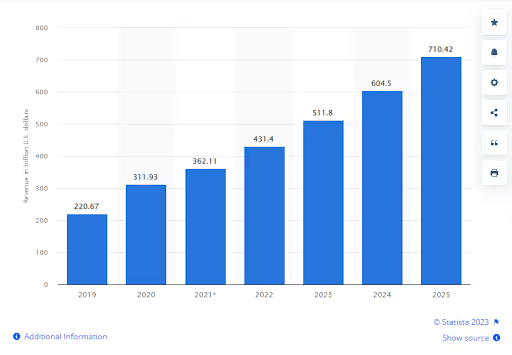
- According to Statista, retail mCommerce sales in the United States are expected to amount to 710 billion U.S. dollars by 2025.
- As per Insider Intelligence, retail mCommerce sales will account for 43.4% of total retail eCommerce sales in 2023, up from 41.8% in 2022. It showcases the significant impact of mobile devices on consumer purchasing behavior.
- Mobile apps play a crucial role in mCommerce growth. TechCrunch reported in a post that the average consumer spends more than 4 hours per day on mobile apps, and mobile commerce apps are among the most popular categories.
- Advancements in technology, such as the integration of augmented reality (AR) and virtual reality (VR) in mobile shopping experiences, are expected to fuel mCommerce growth further. These technologies have the potential to enhance product visualization and provide immersive shopping experiences.
Types Of eCommerce Mobile Apps
As per Forbes, 85% of online shoppers prefer mobile commerce applications over eCommerce websites. Since mobile-based shopping experiences have become mainstream, users of all walks of life prefer to use mobile applications for all their shopping needs. Henceforth, we will see different types of eCommerce mobile applications in different categories. Let’s explore them in detail as it helps you understand the type of shopping app development service you may need to avail.
Business-to-Consumer (B2C) eCommerce
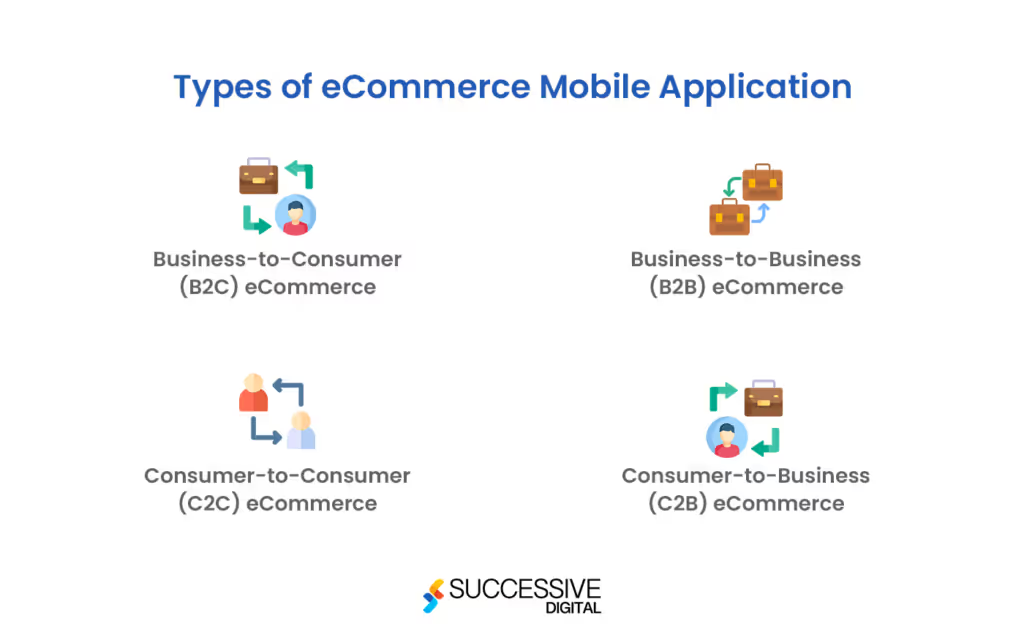
Business to consumer or B2C is the world’s most commonly used eCommerce application. It connects businesses selling products and services to customers and enforces a complete mobile-based transaction experience.
Examples: Amazon, Walmart, Target, Etsy.
Business-to-Business (B2B) eCommerce
Business-to-business or B2B is the fastest growing eCommerce vertical since this mode of online commerce has shortened the long procurement or purchase process short. Business-to-business eCommerce application allows businesses to connect with other businesses for selling and buying goods and services.
Examples: Alibaba, ThomasNet, SAP Ariba.
Consumer-to-Consumer (C2C) eCommerce
Consumer-to-consumer or customer-to-consumer is an application that adopts the business model to facilitate the transaction of products or services between customers. C2C often works as a third-party platform where customers purchase goods from other customers.
Examples: eBay, Craigslist, Facebook Marketplace.
Consumer-to-Business (C2B) eCommerce
Customer-to-business is a commerce model where customers sell products or services to businesses. This model is the opposite of a traditional business setup.
Examples: Upwork, Fiverr, Freelancer.
Since every business now wants to leverage online platforms to connect, engage, and increase sales with customers, other types of eCommerce solutions can be developed for mobile platforms, such as travel & ticket booking applications, auction/bidding eCommerce, social commerce, and others. Enabling mobile commerce experiences for any business allows them to engage well with their target customers on the platform they are most comfortable with.
5 Things To Consider Before eCommerce App Development
Getting into the process of an eCommerce app development can bring immense opportunities, but there are some common restrictions and challenges you need to encounter first. Here are a few key restrictions you may need to put special attention on:
1) Platform Limitations
You may decide to develop a mobile commerce application for iOS and Android, but these platforms have their own specific development frameworks, guidelines, and restrictions. You must collaborate with a mobile app development company that can help you understand the difference between the guidelines of each platform. It allows you to have an application compatible with its platform and easily get accepted on its respective app store.
2. Data Security
A user signs in within your mobile app to engage with your eCommerce solutions. They share personal details such as name, contact number and email, date of birth, credit or debit card details, and others. Since a user trusts you and shares all his personal details on your platform, you must secure the personal details of your platform users.Securing users’ personal details is also crucial for smooth business operations, as some states require you to secure users’ details under regulations and compliance bodies so that citizens’ details can’t be stolen. Deploying applications on private clouds, defining access rules, and setting alarm systems are other means your mobile application developers can use to secure your mCommerce application and its usage.
3. Stability
Typically, customers tend to avoid wasting their valuable time on applications. In this situation, experiencing instability and delays is unacceptable. As a web developer, ensuring the stability of the application should be among your highest priorities. This becomes even more critical when aiming for a return on investment (ROI), increased sales, and higher conversions.Building a flawless website without encountering any challenges is not feasible. However, it is essential to strive for 100% quality. Therefore, customer feedback, regular updates, and input from experts are necessary for making further improvements. This is why stability is an essential component in the development of e-commerce platforms.
4. Scalability
E-commerce app development cannot rely solely on stability and security; scalability is also essential. It is vital to ensure scalability within your e-commerce architecture. This is because the scalability of e-commerce applications handles the increasing workload over time. As the popularity of e-commerce apps grows, the demands of users also increase, and scalability becomes a focal point for developers.Scalability plays a crucial role in maintaining efficient loading times. It improves average response time and the ability to process a higher number of requests per second. Therefore, it is a necessary component of e-commerce development.
List Of Technology Stack For eCommerce App Development
To develop a winning and highly functional eCommerce mobile application for your business, you need to look for professional ecommerce app development services. But you can only decide on the best company when you do have the understanding or basic knowledge of the skill sets or technology stack you will require to develop your mCommerce application. Developing an application requires a technology stack that encompasses various layers and components. Here is a list of technologies commonly used in mCommerce development:
| Category | Technologies / Options |
|---|---|
| Types | B2C, B2B, C2B, C2C, and Others |
| Platforms | iOS, Android, Windows, and Others |
| Native Tools (iOS) | Swift, Xcode, UIKit, CoreData, MapKit, StoreKit, PassKit |
| Native Tools (Android) | Java, Kotlin, Android Studio, Android SDK, Android Jetpack, Google Play Services |
| Cross-Platform Frameworks | React Native, Flutter, Xamarin, Ionic |
| Frontend Technologies | HTML5, CSS3, JavaScript, React, Angular, Vue.js |
| Backend Technologies | Node.js (Express/Koa), Ruby on Rails, Python (Django/Flask), Java (Spring/Play Framework) |
| Database | MySQL, PostgreSQL, Oracle, MongoDB, Cassandra |
| APIs & Web Services | RESTful APIs, GraphQL |
| Payment Gateway | PayPal, Stripe, Braintree |
| Cloud Infrastructure | AWS, Google Cloud Platform (GCP), Microsoft Azure |
| Push Notifications | Firebase Cloud Messaging (FCM), Apple Push Notification Service (APNS) |
| Security | SSL/TLS Encryption, OAuth, JWT (JSON Web Tokens) |
How To Develop An eCommerce App From Scratch?
Building eCommerce solutions for mobile platforms from scratch involves several key steps. Though an ecommerce app development company can consult and develop a solution for you, but you need to know first what you are trying to develop, what the outcomes you want to avail from the project are, and other specifications. It helps you decide the right project timeline and cost and helps you better negotiate with technologies you want your application to be developed since the process is long and time taking. After that, you can adopt to the following guide defining step-by-step guide to building an eCommerce mobile apps:
Define Your Goals And Requirements
- Clearly define your business goals, target audience, and the specific requirements of your mCommerce app.
- Determine the key features and functionalities you want to include, such as product browsing, search, user registration, shopping cart, payment integration, order tracking, and push notifications.
Conduct Market Research And Competitor Analysis
- Conduct thorough market research to understand your target audience, their preferences, and buying behavior.
- Analyze competitor mCommerce apps to identify their strengths, weaknesses, and opportunities for differentiation.
Plan The User Experience (UX) And User Interface (UI)
- Create wireframes or mockups to visualize the app’s structure, flow, and screen designs.
- eCommerce Design should be a user-friendly and visually appealing interface that aligns with your brand identity and provides a seamless shopping experience.
Backend Development
- Set up the backend infrastructure, including servers, databases, and APIs, to support your mCommerce app.
- Develop the server-side components to handle product data management, user authentication, order processing, and other business logic.
- Implement APIs for seamless communication between the app and backend systems.
Frontend Development
- Choose a suitable technology stack (native or cross-platform) for mobile app development.
- Develop the frontend components of the app, including screens, navigation, and user interactions.
- Implement the designed UI/UX and ensure a smooth and intuitive user experience throughout the app.
Implement Key Features And Functionalities
- Integrate product catalog management to showcase and categorize your products effectively.
- Implement user registration, login, and authentication mechanisms to secure user data.
- Incorporate a shopping cart and checkout system to enable seamless purchases.
- Integrate a secure payment gateway to facilitate secure and convenient transactions.
- Implement order tracking features to allow users to monitor their orders’ progress.
- Enable push notifications to engage users with personalized offers, updates, and order statuses.
Test And Refine
- Conduct thorough eCommerce mobile app testing to identify and fix any bugs or issues in the app’s functionality and usability.
- Gather user feedback through beta testing or user testing sessions to gain insights and make improvements.
- Iterate and refine the app based on the feedback received, ensuring a high-quality user experience.
Deploy And Launch
- Prepare the necessary configurations and assets for app store submissions (e.g., Apple App Store, Google Play Store).
- Follow the guidelines and requirements of the respective app stores for submission and approval.
- Launch the eCommerce app on the app stores, making it available to users for download and use.
Monitor, Maintain, And Update
- Regularly monitor app performance, user feedback, and analytics to identify areas of improvement.
- Maintain the app’s backend infrastructure, ensuring scalability, security, and data integrity.
- Continuously update and enhance the app by adding new features, improving existing functionalities, and addressing any issues reported by users.
Remember that the specific steps and technologies used may vary based on your project requirements, team expertise, and budget. Adapt the guide to your specific needs, and consider working with experienced developers and designers to ensure a successful eCommerce app development process.
List Of Top eCommerce Mobile App Features
When developing an eCommerce application, there are several essential features that should be included to provide a seamless and engaging shopping experience for users. Here is a list of eCommerce app features that are commonly included in the development process:
User Registration And Authentication
- Allow users to create accounts, sign in, and manage their profile information.
- Implement secure authentication mechanisms like email/password, social media log in, or biometric authentication (fingerprint or face recognition).
Product Catalog
- Showcase products in an organized and visually appealing manner.
- Include product images, descriptions, prices, and availability.
- Enable users to browse and search for products based on categories, filters, or keywords.
Shopping Cart And Wishlist
- Provide a shopping cart feature that allows users to add products, view the cart contents, and manage quantities.
- Allow users to save products to a wishlist for future reference or purchase.
Seamless Checkout Process
- Streamline the checkout process, minimizing steps and form filling.
- Collect shipping and billing information efficiently.
- Integrate with secure payment gateways to enable smooth and secure transactions.
Order Tracking And History
- Provide users with real-time updates on their order status.
- Allow users to view their order history, including details like order dates, items purchased, and delivery information.
Push Notifications
- Implement push notifications to keep users informed about order updates, promotions, discounts, or abandoned cart reminders.
- Personalize notifications based on user preferences and behavior.
Social Sharing And Reviews
- Enable users to share products or their shopping experiences on social media platforms.
- Allow users to leave ratings and reviews for products, enhancing trust and providing valuable feedback.
Personalized Recommendations
- Leverage user data and browsing history to offer personalized product recommendations.
- Suggest related or complementary products based on user preferences and purchase history.
Multi-language And Localization
- Support multiple languages and provide localization options to cater to a broader audience.
- Enable users to choose their preferred language, currency, and region settings.
Customer Support And Feedback
- Include options for users to contact customer support, such as in-app chat, email, or phone.
- Provide feedback or a rating system to gather user opinions and improve the app’s overall experience.
Security Measures
- Implement robust security measures to protect user data, including SSL encryption, secure payment gateways, and adherence to data protection regulations.
Analytics And Reporting
- Integrate analytics tools to track user behavior, app performance, and key metrics.
- Gather insights from data to make data-driven decisions and optimize the app’s performance and user experience.
You must define and include specific features depending on your business model, target audience, and industry. Conduct thorough research and analysis to determine the features that align with your business goals and cater to the needs of your target market.
Top eCommerce App Development Trends To Watch To Maintain Competitive Advantage
The mCommerce app market is continuously growing and becoming increasingly competitive, with further growth expected in the future. Here are some of the notable trends that can help establish a strong presence in today’s competitive market:
Embracing AR/VR Technologies
eCommerce apps for mobile platforms incorporate technologies like Augmented Reality (AR) and Virtual Reality (VR) to enhance their capabilities. These technologies allow potential customers to experience products and services in virtual environments, enabling them to make informed online purchasing decisions. Studies indicate that over 30% of millennials and Gen Z consumers desire more AR and VR integration in their online shopping experiences.
Integration Of Mobile Wallets For Instant Payment
The rise of user-friendly e-commerce apps has emphasized the importance of a seamless payment process. To ensure a positive user experience, app developers are integrating mobile wallets, enabling users to make payments without entering credit card details or other cumbersome information. For example, Amazon offers Amazon Pay as a wallet integration, facilitating instant payments within the app.
Utilizing Artificial Intelligence (AI)
AI is considered a game-changer in the world of eCommerce, allowing mobile apps to adapt to user behavior. With AI, eCommerce apps can provide personalized shopping experiences, product recommendations, chatbot functionalities, and virtual assistants. The incorporation of AI is expected to enhance the MCommerce experience significantly.
Integration Of Chatbots
Having chatbots available is crucial for MCommerce apps. Chatbots have become integral to eCommerce brands’ strategy to offer round-the-clock customer service. By employing chatbots, brands can ensure their services are available 24/7, providing immediate assistance and support to customers.As the eCommerce market for mobile platforms continues to evolve, staying updated with these trends can give your app a competitive edge and help you deliver an exceptional user experience.
Don’t let outdated eCommerce systems hinder your business growth.
Download our AI in eCommerce whitepaper to understand the capabilities of this technology and how it can help you achieve business excellence.
Click Here to Download
How Much An eCommerce App Development Cost?
Developing an eCommerce application usually costs $20,000. However, the total cost can be as low as $10,000 or as high as $50,000. An application’s major cost revolves around the number of features you want within your application and how complex are these to develop. Developing a minimum viable product or MVP often cost less and is proven affordable than developing a full fledge app. If the cost constraints you from developing an effective eCommerce application for mobile, you can go with MVP development and show it for crowdfunding. When you have ample funds to support and scale your application, you can get involved in developing all intended functionality within your eCommerce application.
Also read –How Much Does It Cost to Develop an eCommerce App?
How Can Successive Digital Help You To Build A Successful eCommerce Solution For Mobile Platforms?
Developing an eCommerce solution for mobile platforms is different in many aspects from eCommerce solutions for web platforms. When you mention mobile commerce, the design of the application took a complete leap since a designer has to build wireframes and navigation for the small screen and touch-based devices. Hence the user experience impacts a lot. Only an experienced eCommerce app development company can grab your vision quickly when you want to initiate a mobile application development for your retail or eCommerce business. Successive Digital, having developed several winning mobile applications for industries including eCommerce, FinTech, EdTech, and others, possess the know-how to solve any challenges in no time.Have a commerce idea for your business, but not sure how to begin with? Reach out to our expert consultant today.