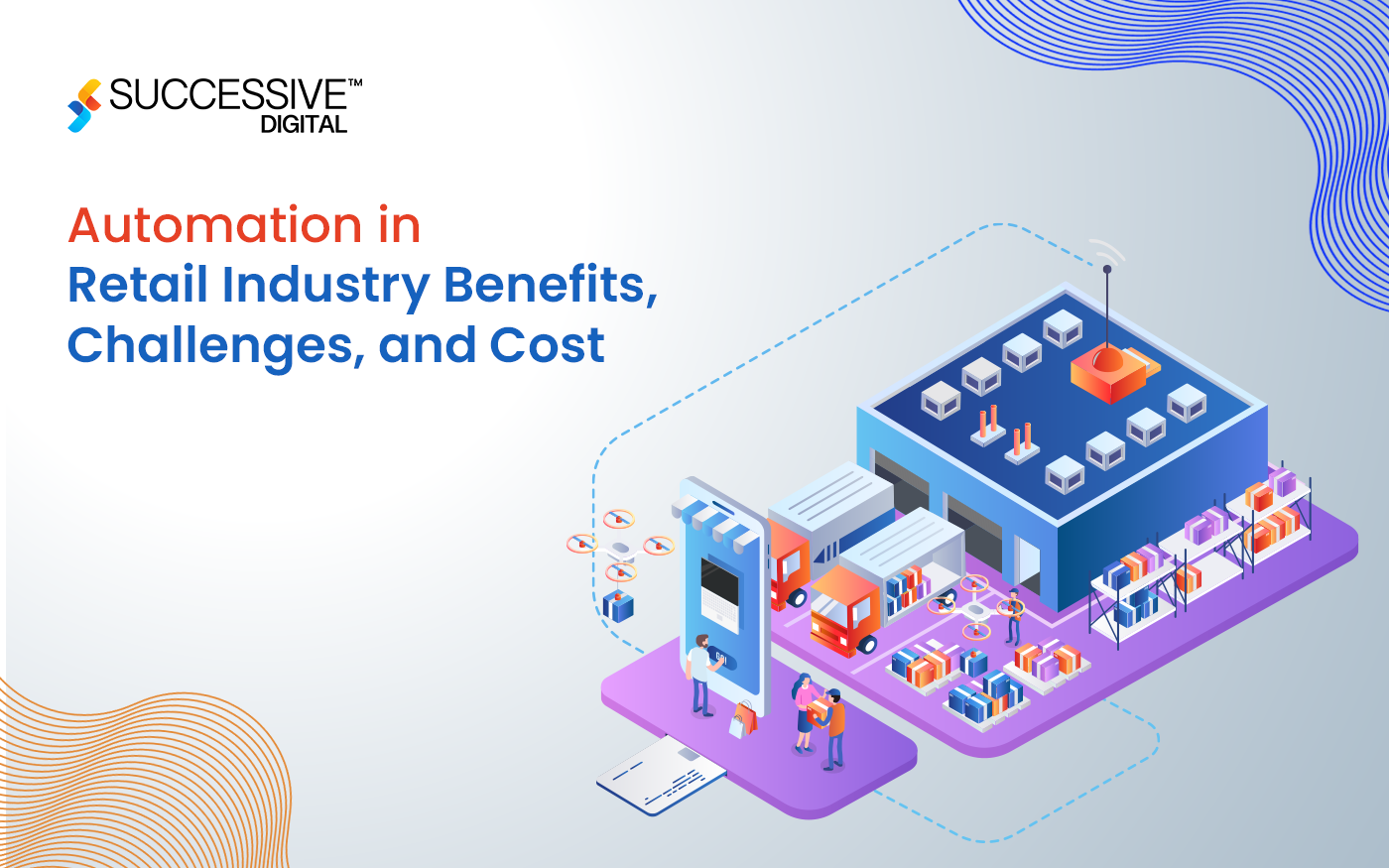
Globalization, driven by international trade agreements and the digital revolution, integrating advanced technologies, has contributed to more sophisticated customer expectations. As a result, the retail industry is under increasing pressure to automate supply chain operations at every touchpoint. Retailers are increasingly adopting automation technologies and various automated customer service solutions to meet these growing demands.As global retail sales are expected to generate around 32.8 trillion U.S. dollars by 2026, margins are set from all sides in this competitive market. Many challenges have raised the bar for automation in the retail industry, such as:
- Higher costs and complexities to manage eCommerce supply chains.
- Suppliers are demanding price adjustments due to inflation in raw material costs.
- Investments in advanced technologies to stay competitive.
- The complex process of inventory management.
- Rising customer expectations for personalized shopping experiences and services.
At the same time, managing the complex cost structure for the effective fulfillment of these tasks reflects the importance of automation in the retail industry. It enables efficient use of resources, helping retailers allocate capital to strategic investments rather than manual, repetitive tasks.Hence, businesses need to adapt to automation to fulfill their customer demands and ensuring smooth business operations. As a matter of fact, the global retail automation market is expected to reach USD 33.02 billion by 2030, projecting a CAGR of 11.67% from the period of 2021 to 2030.
Key Benefits of Automation in the Retail Industry
Better Efficiency
Efficiency is the primary motivator for adopting automation technologies. With the implementation of automation in retail industry, businesses can utilize a large bank of hours with a trained and trusted workforce. This redeployment of resources and focus on more valuable activities open up the opportunity for innovation. Retailers, for example, are creating new customer service roles and training employees for total tech support.
Cost-saving
Retailers are widely using chatbots and IVR systems, enabling them to handle a high volume of routine customer inquiries and simple tasks, such as:
- Checking order status
- Track shipments and provide shipping updates
- Real-time customer support
- Provide a better customer experience
- Initiate returns or exchanges
- Helping customers place orders
By automating repetitive tasks, retailers can better manage finances through the following benefits:
- Reduce labor costs
- Minimize errors to avoid financial losses
- Optimize resource allocation
- Ensure human effort is focused on more strategic activities
Enhanced Customer Experience
With the incorporation of automation in the retail industry, businesses can offer more satisfying shopping experiences to their direct customers by providing the following conveniences to them:
- Self-checkout systems
- Point-of-sale transactions
- Personalized product recommendations
- Processing online orders fast and effortlessly
- Hassle-free delivery and returns
- 24/7 customer service support
Customer experience can be enhanced through the integration of intelligent technologies like generative AI and robotic process automation in retail industry. Using deep learning models, Gen AI can analyze customer data, generating personalized content and recommendations.
Data-Driven Insights and Decision Making
Technologies like AI and RPA process large amounts of data and identify patterns efficiently, much better than traditional ERP systems. Through rule-based workflows integrated with AI, RPA in retail industry is used can trigger actions based on predictive insights, ensuring seamless and responsive decision-making in real time.Consequently, an AI app development company can be hired to develop software like:
- Smart inventory management
- Shelf space management
- Automated supply chain management
These software analyze data and, based on it, timely signals problems that an employee may be unable to address. As a result, you will be able to establish a solid foundation for data-driven insights and more informed decision-making.
Reduced Human Error
One of the significant benefits of AI automation in the retail industry is that it can effectively manage inventory systems by monitoring and updating their status in real time. Hence, it can prevent costly mistakes like overstocking or understocking. At the same time, automation can reduce manual and rule-based tasks by:
- Leveraging customer data
- Real-time inventory tracking
- Automated order processing
Therefore, it minimizes the risk of human error and ensures that processes are carried out consistently and accurately.
Increased Scalability
Automation helps retailers to perform routine tasks faster and on a larger scale, which reduces production times and increases output. From fraud protection to fulfilling higher volumes of orders, AI and ML technologies allow retailers to serve more customers, especially during peak periods.Moreover, RPA in retail industry can be easily adapted to various processes without the need for extensive reconfiguration, allowing businesses to respond quickly to changing needs and requirements.These solutions can scale with the business, handling increasing workloads without the need for additional human resources. This scalability ensures that businesses can grow and expand their operations efficiently.
Real-world Examples of Retail Automation
Automated Inventory Management Systems
By leveraging AI-driven inventory management systems, retailers can update their inventory in real-time. The implementation of automated inventory in retail can help you manage your business process in many ways, like:
- Keeping track of stock levels
- Predicting demand patterns
- Automatically reordering items when stocks run low
Therefore, it draws out many benefits, such as:
- Ensuring customers always find what they need
- Enhancing the shopping experience
- Reducing the risk of stockouts and overstocking
Automated Invoice Processing
These systems automate the steps involved in processing invoices and seamlessly extract invoice data from your business system into your ERP. RPA in retail industry streamlines invoice processing in many ways, such as:
- Automatically extracting data from invoices
- Validating invoices against purchase orders
- Processing payments
Advantages/Benefits:
- Reduces the manual effort required
- Minimizes errors
- Speeds up the payment cycle
- Allow retailers to maintain smooth operations
- Focus on customer satisfaction
Personalized Shopping Strategies
AI-powered algorithms analyze customer data and offer a shopping journey that feels unique to each individual. You can leverage many benefits for your retail business by implementing AI technology to streamline shopping process for your customers, such as:
- Creating personalized shopping experiences
- Better product recommendations
- Tailored promotions
Better Returns Processing
Automation in returns processing simplifies the often complex task of handling customer returns. RPA bots can improve customer satisfaction by reducing the time and effort required to manage returns in many ways, such as:
- Process return requests
- Update inventory
- Issue refunds quickly
Streamlined Supply Chain Management
Automation in the retail industry helps retailers manage one of the critical and complex processes, i.e., the supply chain. By working together, technologies like AI and RPA in retail industry optimize SCM operations and provide many benefits:
- Order fulfillment
- Delivery management
- Predict supply chain disruptions
- Reroute shipments as needed
- Ensure timely delivery and reduce costs
This enhances the overall efficiency of the supply chain, resulting in a smoother experience for customers.
Point-of-Sale (POS) Solutions
Modern POS systems, powered by AI and RPA, also contribute to higher customer satisfaction with personalized marketing efforts. It offers many advantages to your retail business, such as:
- Process transactions quickly
- Gather valuable customer data
- Multiple payment methods
- Offer loyalty program integration
- Seamless checkout experiences
Self-Service Checkout Systems
These systems allow customers to scan and pay for their items independently and are enhanced by AI and automation. Leverage the following benefits of automated self-service checkout systems:
- Speed up the checkout process
- Reduce wait times
- Provide a convenient shopping experience
- Freeing up staff to assist customers in other areas of the store
Challenges of Implementing Automation in Retail Industry
Lack of Human Touch
Automation is an excellent way to enhance efficiency in retail industry. However, it can lead to absence of a personal touch can make the shopping experience feel impersonal, leading to potential customer dissatisfaction.
Data Security and Privacy Concerns
Implementing technologies for automation in retail industry like AI and RPA collect, analyze, and store vast amounts of customer data. Hence, the concerns about data security and privacy are rising significantly.
Complex Process of Integrating AI
Integrating AI into existing retail systems can be a complex and time-consuming process. Significant technical expertise and careful planning are required to ensure that AI solutions work seamlessly with current operations. The complexity of this integration can lead to disruptions during the transition period and may require extensive training for staff to effectively use the new technology.
Cost of Implementation
Automation in retail require you to work with experiend AI app development services, and implementing advanced technologies along with the expert assistance can lead to costly process. While automation can lead to long-term savings, the initial investment may be a barrier for smaller retailers, making it challenging to justify the cost against immediate returns.
The Cost of Implementing AI Technologies to Automate Retail Operations
Initial Setup and Acquisition Costs
Hardware and Software
Purchasing AI-powered systems can be expensive, such as:
- Advanced point-of-sale (POS) solutions
- Automated inventory management
- Personalized shopping platforms
Retailers may need to invest in specialized hardware, software licenses, and cloud-based services tailored to their specific needs.Do you want to know how much it costs to develop a full-fledged retail app by integrating advanced technologies? Read our blog on mobile app development costs to decide the total budget for your project.
Custom Development
Off-the-shelf AI solutions may not always meet a retailer’s unique requirements, and thus, you need to spend additional on various steps, such as:
- Customizing and developing AI algorithms
- Integrating them with existing systems
- Fine-tuning them for optimal performance
Integration and Implementation Costs
System Integration
AI technologies often need to be integrated with existing legacy systems, which, in turn, require significant time and resources to ensure seamless operation across all retail processes.
Staff Training
Employees need to be trained to work effectively with new AI-driven tools and systems for the following prospects:
- Understanding how to use the technology
- Adapting to new workflows and processes
- Adding to the overall implementation costs
Ongoing Maintenance and Support Costs
Software Updates and Upgrades
AI technologies require regular updates to stay current with evolving trends and enhance performance. These updates may come with additional costs, especially if the systems require significant modifications.
Technical Support
Maintaining AI systems often requires ongoing technical support for various purposes, such as:
- Ensuring that the AI systems continue to operate efficiently
- Minimizing downtime
- Reducing disruptions to retail operations
Data Management and Storage Costs
Data Collection and Storage
AI systems in retail rely on vast amounts of data to function effectively, such as:
- Customer behavior analytics
- Inventory data
- Sales trends
Storing, managing, and processing this data securely can incur substantial costs, particularly when dealing with sensitive customer information.
Data Security Measures
To protect against data breaches and ensure compliance with regulations, retailers may need to invest in advanced security measures, such as
- Encryption
- Monitoring tools
- Penetration testing
These measures add to the overall cost of implementing AI technologies.
Potential Hidden Costs
Change Management
The shift to AI-driven automation can lead to resistance among employees, requiring investment in change management programs to help staff adapt to new roles and responsibilities.
Business Disruption
During the implementation phase, there may be temporary disruptions to retail operations, potentially leading to lost sales and additional costs related to mitigating these impacts.
Automation in Retail Industry: What the Future Holds?
The future of automation in the retail industry is increasingly intertwined with the growing impact of generative AI technology. Generative AI, with its ability to create personalized content, design tailored shopping experiences, and predict customer preferences, is set to revolutionize how retailers engage with their customers. By leveraging this technology, retailers can enhance customer satisfaction through more interactive and dynamic shopping environments, whether online or in-store.As generative AI continues to evolve, its integration into retail operations will drive even greater efficiencies. From automating complex supply chain processes to creating real-time marketing campaigns, this technology will enable retailers to respond swiftly to market changes and customer demands. The future of retail automation lies in generative AI technology, streamlining operations and creating more meaningful, personalized experiences that build stronger customer relationships.