As people are increasingly dependent on technologies to complete their daily tasks, cyber-attacks constitute a significant concern for individuals and organizations alike. In fact, over 349 million people faced the impact of data breaches in 2023 alone. Slow response and remediation efforts are another major concern in today’s cybersecurity domain. However, the implementation of AI in cybersecurity has emerged as a promising solution for securing company assets and protecting user data. The integration of AI-driven cybersecurity solutions is transforming the security posture of the organization and providing various advantages like:
- Enhance cyber threat intelligence
- Rapidly identify risks
- Automate labor-intensive tasks
- Free up professionals to focus on higher-level tasks
- Reduce response time
AI integration is no longer limited to MNCs or enterprises. MSPs and SMBs are hiring cybersecurity consulting firms to embrace this technology and defend themselves against threats more efficiently and effectively.
The Key Obstacles of Cybersecurity that AI Can Overcome
Volume and Sophistication of Cyberattacks
With malware, phishing attempts, and new attack vectors emerging daily, the number of cyber threats is overwhelming. Moreover, cyberattacks are becoming increasingly sophisticated, which challenges even the most fortified defenses, as they often use advanced techniques to evade traditional security measures.
Balancing Security and Authentication Challenges
Complex passwords, frequent password changes, and multi-factor authentication (MFA) are being implemented to improve the security approach of various organizations. However, numerous processes can be overwhelming to manage. Additionally, the tension between security and usability makes it difficult to implement effective authentication systems that both protect sensitive information and provide a seamless user experience.
Data Overload
Organizations that deal with a larger volume of sensitive data will face difficulties in managing this much information, and they might overlook cybersecurity best practices. Moreover, this massive amount of data makes it challenging to sift through and identify actionable insights.
Insider Threats
Employees are often considered the weakest link in cybersecurity, and thus, various security training like ISMS and data security are made compulsory. As a result, insider threats, whether intentional or accidental, pose a significant challenge to cyber security because they are difficult to detect with traditional security measures.
Evolving Regulatory Compliance
Unmanaged and unethical data exchange practices create significant cybersecurity challenges. Therefore, various governments have taken charge by establishing rules and regulations according to their country’s specific norms and requirements. However, keeping up with evolving cybersecurity regulations and ensuring compliance can be complex and time-consuming.
Zero-Day Vulnerabilities
These are the security flaws that are unknown vulnerabilities to the party responsible for fixing them in software, hardware, or firmware. Attackers can exploit these vulnerabilities before they are even patched.
The Role of AI in Cybersecurity
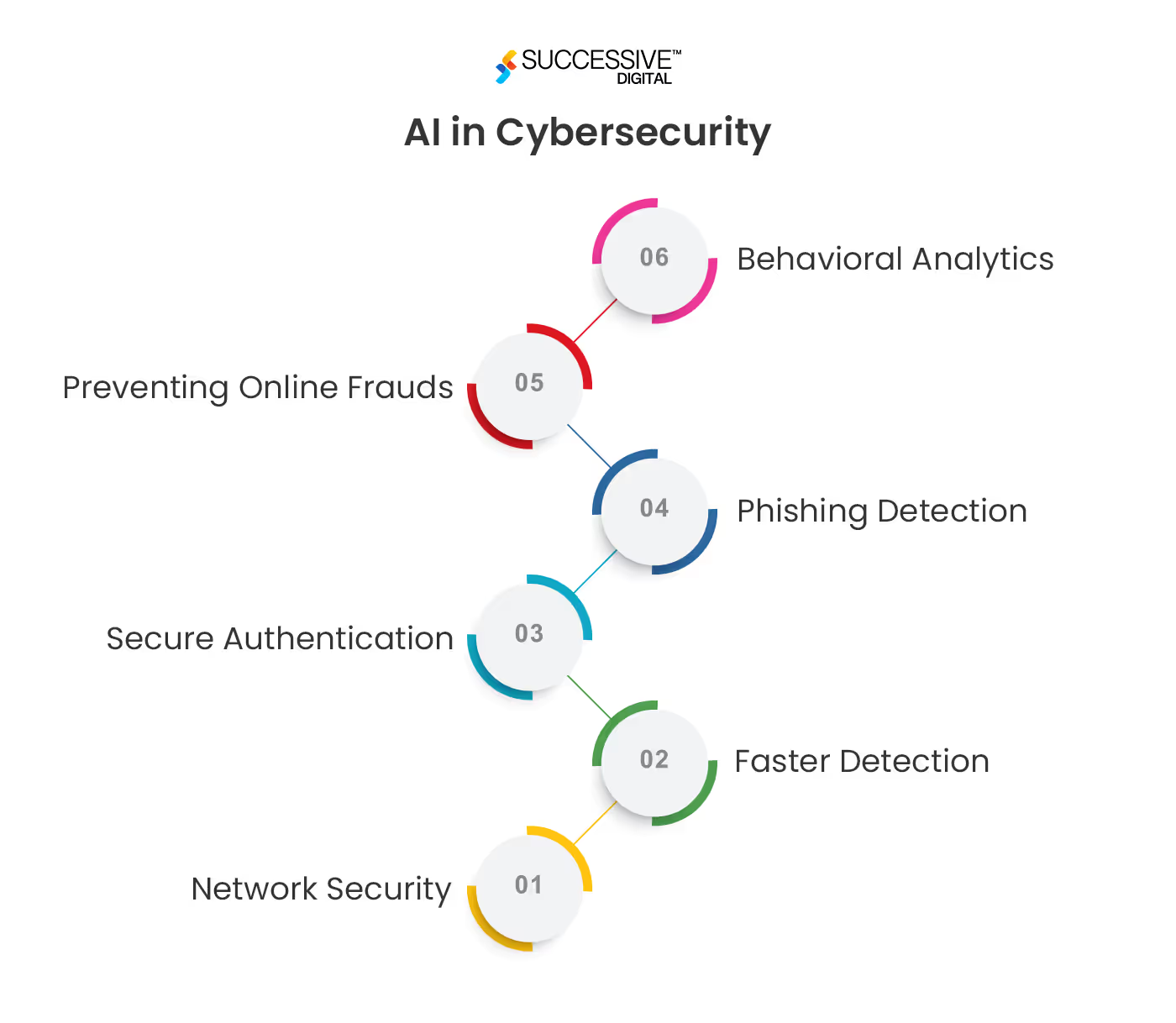
AI is one of the leading technologies currently transforming cybersecurity strategies. It presents promising solutions to defend against the sophisticated threats that modern organizations face. The AI integration in cybersecurity enhances the capabilities of security systems in several crucial ways, such as:
- Early detection of potential security threats.
- Continuously analyzing vast amounts of network data in real time.
- Identify anomalies and patterns that may indicate a security breach.
- Select new and evolving threats, making it a powerful tool against zero-day attacks.
- Securing infrastructure against persistent threats that typically bypass conventional security controls.
- Identify patterns and anomalies that indicate potential threats.
- Automate threat detection and response
- Adapting system according to new threats by learning from each attack.
- ML algorithms can recognize complex attack patterns and provide insights.
Enhancing Threat Detection with AI in Cybersecurity
Real-Time Threat Analysis in Network Security
AI algorithms help cybersecurity applications sift through and correlate disparate data points across an organization’s infrastructure, from server logs to network traffic, to identify hidden threats. This degree of depth, speed, and accuracy is unattainable by the human attempt at analysis. The implementation of AI network security can assist cybersecurity consulting companies in managing security policies and ensuring a robust network. These models can learn and evolve from each attempted attack, enhancing their predictive capabilities through various measures, such as:
- Understanding the tactics, techniques, and procedures (TTPs) of attackers
- Blocking suspicious IP addresses or terminating malicious processes
- Isolating affected systems to stop spreading and damaging the entire network
- Recommending adjustments to firewalls
- Intrusion prevention systems
Fraud and Anomaly Detection
AI and ML technologies, including deep learning, neural networks, and reinforcement learning, are at the forefront, ensuring enhanced anomaly detection and autonomous response systems. These technological advancements excel at identifying deviations and anomalies from normal patterns, improving the accuracy and speed of threat detection, including zero-day attacks.
Automating Routine Tasks
As we know, AI models are self-learning; they can enhance cybersecurity systems’ ability to detect threats early. For example, your AI-enabled cybersecurity system recognized ransomware attacks and successfully reduced the potential damage. This is when AI-driven response mechanisms come into play and initiate containment protocols instantly. This helps in limiting the spread of the attack across the network.
Predictive Analytics
Beyond detection, AI algorithms analyze trends and historical data, identify patterns, and correlate data, which helps cybersecurity professionals predict threats. Hence, the predictive capabilities of AI in cybersecurity allow system to anticipate attacks before they occur and strengthen them proactively.
AI-Driven Cybersecurity and Automated Threat Intelligence
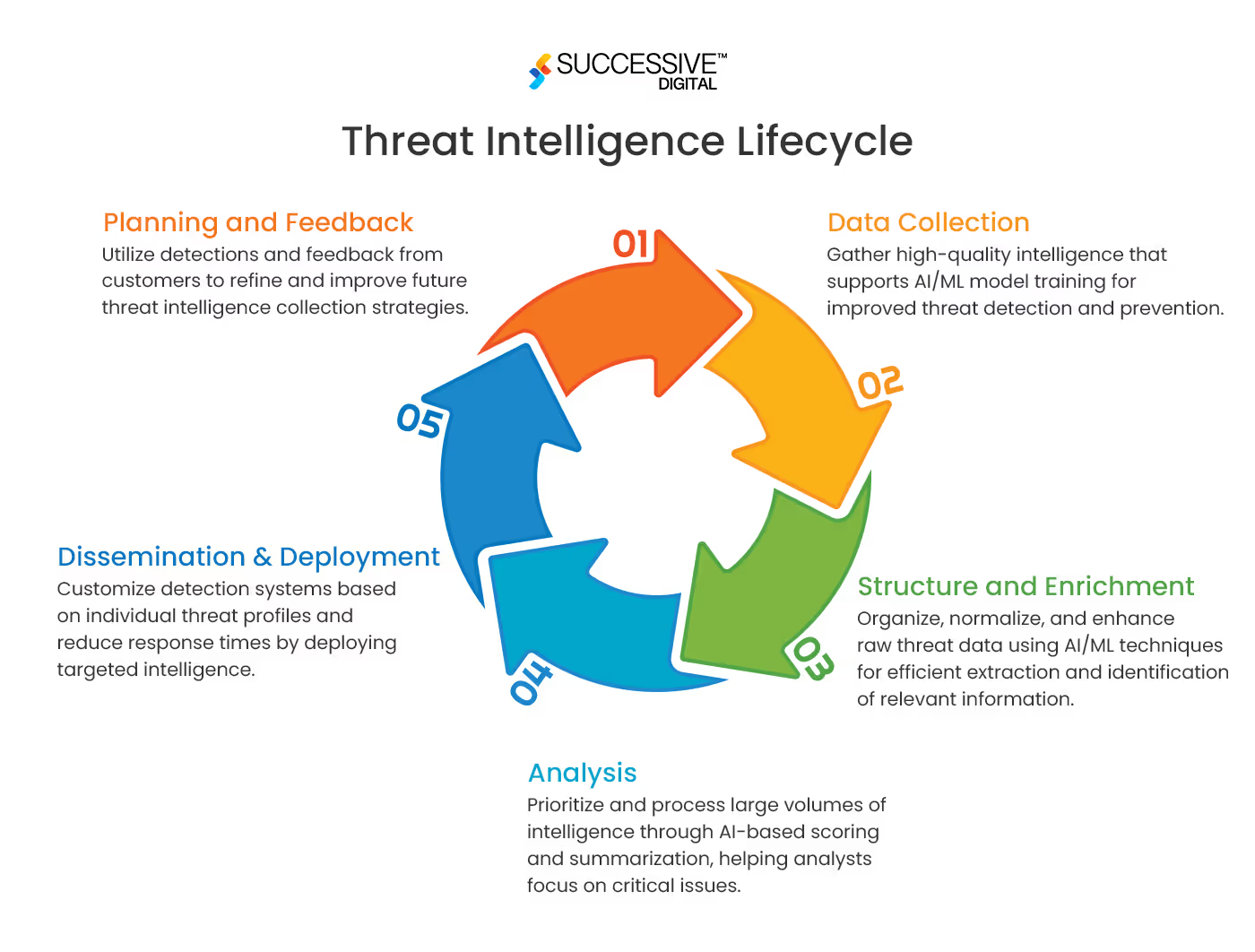
The use of AI in cybersecurity improves the way one detects, responds, and defends against threats. This makes organizations more efficient in handling cyber risks and threats. AI can be integrated into various cybersecurity technologies, such as threat intelligence platforms and SOAR systems, responding to cyber incidents organization-wide.Traditional security notions revolved around defensive practices. That means identifying and neutralizing threats that have already made their way into the system. However, this approach is no longer sufficient. One of the benefits of AI in cybersecurity is that it has a reactive approach, which never ceases monitoring and analyzing network activities. This shift from reactive to proactive threat detection is transforming cybersecurity posture in the complicated and fast-changing cyber threats environment. AI-enabled cyber threat detection now concentrates on anticipatory defense mechanisms and threat intelligence sharing.
How is AI Used in Cybersecurity Threat Intelligence?
Advantages of AI in Cybersecurity
Efficiency
AI-driven cybersecurity tools adapt to ever-changing threats, which provide uninterrupted protection. Their ability to monitor, analyze, detect, and respond to cyber threats in real time could be vital in averting major cybersecurity incidents.
Accuracy
The implementation of AI in cybersecurity makes it possible to process a vast amount of data, which would be impossible otherwise. Moreover, over time, cybersecurity professionals can enhance AI model accuracy by adding more data to the training set, detecting and remediating issues with better accuracy.
Cost-efficiency
AI-enabled cybersecurity solutions can be cost-effective in the long term since they reduce the need for extensive manual oversight. Enterprises and mature MSSPs are already leveraging these benefits and is expected to extend to MSPs and SMBs in the near future.
Removing Human Error
AI can analyze vast datasets to identify trends, patterns, and anomalies in cybersecurity that can be challenging for humans to identify or process. For example, fraudulent activity in fintech solutions can be detected by analyzing the transaction processes, even the minute details possible, without being biased.
Better Decision-making
As AI technology use advanced ML algorithms and data science to provide accurate insights, which reduced the chance of human error. Consequently, cybersecurity professionals will be able to respond to potential security breaches with the right solutions swiftly, improving their decision-making skills.
Limitations and Challenges of AI in Cybersecurity
Data Privacy Concerns
AI relies on data to train the models. In cybersecurity, it helps detect and prevent threats by analyzing patterns, identifying vulnerabilities, and responding to potential risks in real-time. This data includes sensitive personal or financial information, which raises security questions and some data privacy concerns.Companies must ensure transparent data usage policies and regulations with robust data protection measures to overcome this challenge.
False Positives and Negatives
While automation reduces human error, developers play a critical role in designing and guiding the algorithms, ensuring that the use cases are aligned with business objectives. However, biases can still arise from data quality and initial assumptions in the design process. These biases may result in false positives or negatives, which attackers can exploit and escape scrutiny.
Evolving Threats
AI systems are trained on historical data and rely heavily on quality and diversity for an error-free system. However, the evolving threats present significant challenges AI-driven threat detection, leading to inaccuracies and unknown vulnerabilities.
Best Practices for Implementing AI in Cybersecurity
Choosing the Right Tools
With the right tools at your disposal, you can leverage the useful advantages of AI in cybersecurity. These benefits include:
- Precise threat detection
- Seamless integration with existing systems
- Optimal resource utilization
- Scalable and flexible solutions
- Custom AI solutions
- Maximizing the effectiveness of AI
- Minimizing operational risks and inefficiencies
Continuous Training and Updates
As we already know, the threat landscape is ever-evolving, which can significantly contribute to the impact of AI in cybersecurity. Therefore, it is essential to ensure continuous updates and learning for AI models to remain effective.
Balancing Automation with Human Oversight
It is essential to ensure human oversight and adaptation for smooth ongoing operation in a constantly changing risk environment. However, the reliance on high-quality data and the need for regular updates make AI implementation resource-intensive.
Conclusion
In this blog, we have already discussed the benefits and risks of AI in cybersecurity. If you want to know the optimized implementation of AI-driven threat detection and response that scales with technology change and business requirements, you must know the future of AI in cybersecurity as well. With innovations taking place and enhancing deep learning technologies, the future of AI in cybersecurity is promising. Cybersecurity consulting companies are utilizing these technologies for faster data processing, pattern recognition, and increasing the transparency of AI in order to ensure proactive actions by security teams. The future of threat detection and response powered by AI is promising. Experts predict that it will involve improving deep learning technologies for:
- pattern recognition
- faster data processing
- understand its decision-making process better
Overall, the integration of AI in cybersecurity is expected to improve autonomous threat detection and incident response and the system’s capacity to adapt to evolving threats.Wondering where to find custom AI solutions tailored to meet my business requirements and cybersecurity challenges? You can find a comprehensive, AI-powered solution at Successive Digital, a leading IT service provider designed to build robust defenses against cyber attacks with ease. Our experts leverage the latest AI technologies and frameworks to secure your business.Ensure robust infrastructure with our AI-driven cybersecurity solutions!