Businesses rely significantly on software applications to drive operations and customer experiences. However, with time, applications become outdated, ineffective, and unable to meet the needs of advancing technologies.Legacy applications often become bottlenecks, limiting corporate agility and innovation. This is where application modernization solutions become critical. Upgrading your existing apps to modern technologies and architectures is smart, allowing them to generate more value. But have you ever thought of what specific approaches exist for application modernization? How do you find the best one for your business needs among many options? Let’s find out the right approach to modernize your legacy applications.
The Need for Application Modernization
Changes are inevitable in the ever-evolving digital world. To attain an edge in the market, businesses must participate in technological evolution and embrace change. Every organization requires an upgrade to remain competitive, necessitating a timely upgrade of outdated applications. Aside from having a competitive advantage, some statistics demonstrate the need for legacy application modernization. App modernization can result in 30-50% cheaper application maintenance and operating costs. It reduced hardware, software, and staffing expenses by approximately 74%.
App modernization doesn’t just cut costs; it also boosts operational efficiency by a promising 10%, which should inspire optimism about the potential gains from this initiative. Legacy application modernization can lead to a staggering 14% increase in annual revenues, which should ignite excitement about the potential business growth this initiative can bring, particularly for larger enterprises, with an average predicted increase of USD 1 billion. Better services lead to better outcomes, so your legacy application should make the necessary adjustments. Read about the key trends of legacy application modernization here- 6 Approaches to Modernize Legacy Applications
Core Components of Application Modernization
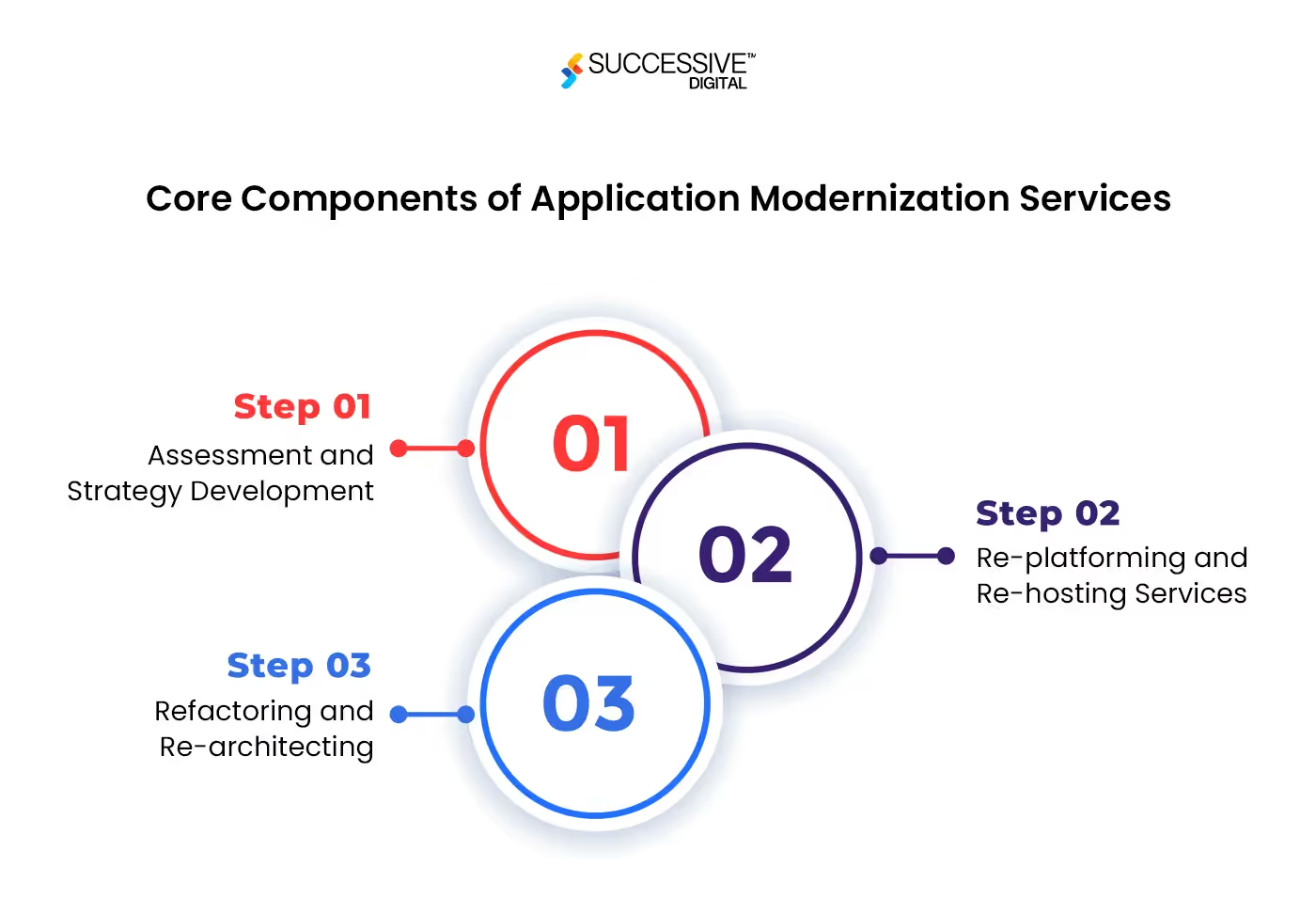
Several essential elements play a vital role in application modernization by guaranteeing a seamless shift from monolithic systems to more flexible and expandable frameworks. These parts are intended to efficiently evaluate, plan, and carry out modernization projects. Let’s explore these essential elements:
Assessment and Strategy Development
An extensive evaluation of the existing systems is the first step in the legacy application modernization process. This entails assessing the current workflows, infrastructure, and applications to find inefficiencies, duplications, and potential improvement areas. By conducting a thorough analysis, businesses can better understand the potential given by modernization and the challenges represented by legacy systems. After the assessment, a solid plan is created to direct the app modernization initiatives. The objectives, schedules, needed resources, and risk-reduction strategies for a successful modernization project are described in this strategy.
Re-Platforming and Re-Hosting
Approaches like replatforming and rehosting and very crucial for legacy application modernization. Re-platforming is migrating an application’s infrastructure to a new platform, such as a cloud environment. This may entail transferring programs from on-premises servers to cloud services such as AWS, Azure, or Google Cloud. Replatforming can enhance scalability, performance, and security. Re-hosting includes migrating applications from one platform to another without significantly changing the application. This can consist of migrating apps from one cloud provider to another or from the cloud to on-premises environments. Re-hosting might be advantageous when the program does not require significant changes but still benefits from the new platform.
Refactoring and Re-architecting
Refactoring includes reorganizing application code to increase maintainability, scalability, and performance. This entails breaking down monolithic apps into smaller, more manageable components and enhancing the overall design. It can decrease technical debt and improve a program’s overall quality. These strategies are often utilized in legacy application modernization. However, re-architecting redesigns the application architecture to suit modern software development ideas and technology better. This includes implementing a microservices architecture, containerization, and DevOps approaches. To know the importance of legacy application modernization services in healthcare- Modernizing Legacy Systems in Healthcare: A Comprehensive Guide
Strategies for Modernizing Legacy Systems
After identifying which systems or applications need modernization, businesses must choose from multiple legacy application modernization strategies. These can range from integrating new technologies to adopting phased approaches to minimize disruption.
Replatforming
Lift and Shift Infrastructure Optimization – This approach involves migrating legacy applications to modern infrastructure platforms. Businesses can migrate applications or systems to cloud environments or keep them in containers without making significant changes to code. This approach enables enterprises to benefit from current infrastructure features such as auto-scaling, managed services, and pay-as-you-go pricing models while reducing the risk and complexity associated with code restructuring.
Refactoring
Code Refactoring Microservices Architecture – It reorganizes and improves existing code to promote efficiency, maintainability, and scalability while preserving functionality. This method allows organizations to gradually upgrade legacy programs, lowering technical debt and enhancing code quality. Refactoring monolithic applications into microservice architectures improves flexibility, agility, and scalability. Microservices enable businesses to modularize applications into smaller, independently deployable components, allowing for easier maintenance and upgrades.
Rearchitecting
Application Redesign API-First Approach – Rearchitecting is rewriting the architecture of legacy systems to better comply with new cloud-native principles like scalability, resilience, and agility. This method could include breaking down monolithic programs into microservices, using serverless computing, or leveraging container orchestration technologies like Kubernetes. Rearchitecting legacy systems using an API-first strategy allows for smooth integration with new technologies and services. Exposing essential functionalities as APIs enhances flexibility, interoperability, and extension, supporting future business demands and innovation.
Replacement
Off-the-Shelf Solutions Build vs. Buy Analysis – In certain situations, replacing legacy systems with off-the-shelf solutions or software-as-a-service (SaaS) offerings may be less expensive and faster than updating existing applications. Evaluate available commercial solutions that fit the organization’s needs and offer a clear migration route.Conduct a build vs. purchase study to establish whether custom development or commercial off-the-shelf (COTS) solutions are the best options for meeting corporate needs and modernization goals.
Phased Approaches
Incremental Modernization Pilot Projects – A phased approach enables organizations to prioritize necessary functionality, reduce risks, and limit disruption to ongoing operations. Identify low-risk components or modules for initial modernization efforts, then gradually increase them over time. Conduct pilot projects or proofs-of-concept to validate modernization techniques, assess feasibility, and demonstrate benefits before expanding efforts throughout the business. Pilots assist in identifying potential difficulties and refining modernization strategies based on real-world feedback and outcomes.
Benefits of Enterprise Application Modernization
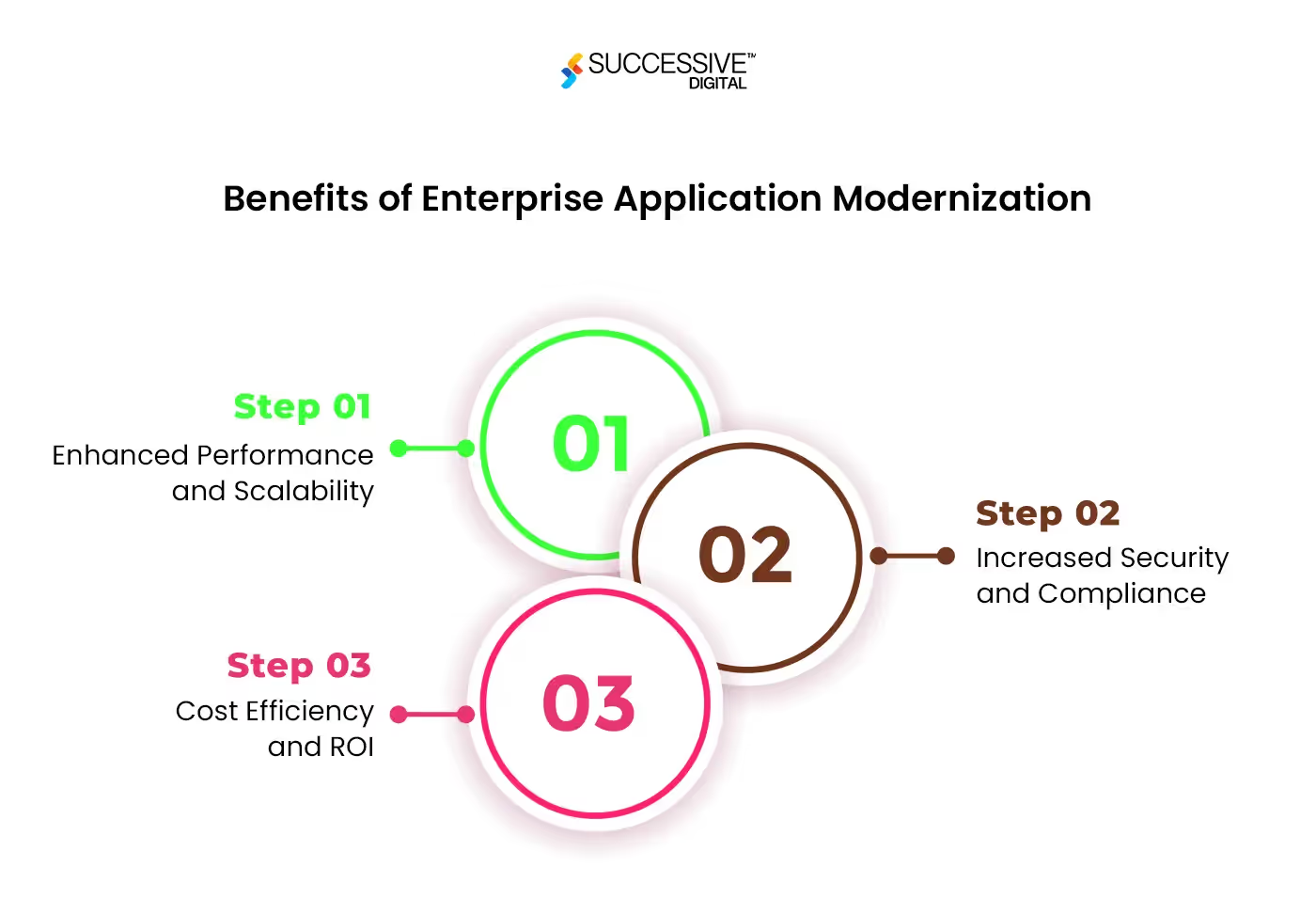
To achieve notable scalability and performance metrics gains, enterprise application modernization is essential for enterprises. Let’s know what happens when you modernize your enterprise applications:
- Optimized Resource Utilization: Modern applications rely on advanced algorithms and designs to efficiently manage computational resources. This results in faster processing speeds and lower latency, ensuring applications function correctly under varying loads.
- Elastic Scalability: Modern cloud-native applications are built with scalability in mind. They may dynamically alter resources based on demand, allowing firms to handle peak loads while maintaining performance. This adaptability is essential for organizations with variable workloads.
- Improved Responsiveness: Containerization and microservices are standard parts of modernization. Applications using these technologies are more durable and modular, which enhances user experience and response times.
- Enhanced Monitoring and Diagnostics: Modern tools’ advanced monitoring and troubleshooting capabilities give users instant insights into their applications’ functionality, facilitating the quick identification and removal of performance bottlenecks.
- Advanced Security Features: Modern applications utilize the latest security standards and practices, such as encryption, multi-factor authentication, and secure coding techniques. This reduces vulnerabilities and guards against emerging threats.
- Regular Updates and Patches: Vendors frequently stop supporting legacy systems, leaving vulnerabilities unpatched. Regular updates and patches that quickly resolve security issues benefit modernized systems.
- Compliance with Regulations: Data protection, privacy, and industry-specific regulations constantly change. Contemporary applications are engineered to conform to these standards, guaranteeing that businesses stay out of trouble legally and financially.
- Enhanced Data Protection: Modern systems offer robust data protection techniques, such as complex firewalls, intrusion detection systems, and data loss prevention tools. These precautions preserve the integrity of company data and protect sensitive information.
- Reduced Maintenance Costs: Legacy systems often require extensive maintenance and specialized skills, leading to high operational costs. Modern applications are easier to maintain, reducing the need for costly interventions.
- Lower Infrastructure Costs: By moving to cloud-based or hybrid solutions, enterprises can reduce the need for expensive on-premises infrastructure. Pay-as-you-go models and scalable resources mean businesses only pay for what they use, optimizing expenditures.
- Increased Productivity: Modern applications often come with improved user interfaces and automation capabilities, streamlining workflows and increasing employee productivity. This operational efficiency translates to cost savings and enhanced output.
- Faster Time to Market: Modernized applications can be developed and deployed more quickly, enabling enterprises to respond faster to market changes and opportunities. This agility results in competitive advantages and revenue growth.
- Energy Efficiency: Modern systems are more energy-efficient, reducing enterprise applications’ overall carbon footprint and utility costs.
By investing in legacy application modernization services, enterprises can achieve long-term cost efficiencies, maximize their ROI, and better align their IT capabilities with business objectives. This strategic approach optimizes current operations and sets the stage for growth and innovation.Read this guide on app modernization- Comprehensive Guide to App Modernization: Transforming Legacy Systems for the Future
Choosing the Right Application Modernization Service Provider
Choosing the right application modernization service provider is essential to maintaining business continuity and working on collective growth. Below are the key considerations you must remember while selecting the legacy application modernization service provider.
- Technical Expertise
When it comes to legacy application modernization services, search for one whose technical expertise matches your specific needs. They must have a devoted team of professionals who are not only technically proficient but will also enhance your company’s skills through innovative and unique software development services. Furthermore, evaluate their critical technology stacks, operational scalability, and workflow models.
- Industry Experience
One of the most essential elements to consider is a modernizing partner who understands your industry. A legacy modernization company vendor with hands-on knowledge in your industry provides relevant solutions and insights beyond generic services and personalizing strategies to your market’s complexities. As we all know, modernizing legacy apps is a complex process that requires extensive knowledge. As a result, you must evaluate the track record of successful modernization initiatives.
- Agility
In a continually changing business environment, look for an agile service provider capable of embracing change. The application modernization process includes execution, often necessitating instantly changing the modernization strategy or methods to overcome unknown bottlenecks. As a result, you should look for a team of bespoke software programmers who see obstacles as opportunities and modify methods quickly to keep your company competitive in a dynamic industry.
- Shared Business Vision
It is essential to deal with a service vendor who understands your current goals and anticipates the same ideas, methods, and working models for long-term success as you. A shared business vision guarantees that every technology step is consistent with your overall goals, building a relationship that grows alongside your company. Furthermore, you should address your challenges with your software modernization team to reduce risk.
- Customer Satisfaction
Customer satisfaction and quality are two of the most important factors when picking an application modernization partner. It can assist you in making a decision based on real-world circumstances. You can contact former clients and review their case studies to assess their legacy modernization tactics and gain a clear image of the provider’s dedication to client happiness. A vendor who values long-term partnerships is more likely to prioritize your needs and exceed your expectations.
Industry Wise Application Modernization Solutions
Let’s find out how different industries have transformed with legacy application modernization solutions:
- Healthcare
Healthcare organizations increasingly rely on digital apps to enhance patient care, manage operations, and meet demanding regulatory requirements. Here are several significant legacy application modernization initiatives and their advantages for the healthcare industry:
Electronic Health Records (EHR) Modernization:
With their seamless integration, modern EHR systems offer a comprehensive view of a patient’s history, prescriptions, and therapies, which enhances the precision of diagnosis and treatment planning. These systems use strong encryption and stringent access restrictions to guarantee patient data security and compliance with HIPAA laws. Modern EHR systems also include interoperability standards like FHIR and HL7, facilitating easy data interchange across systems and healthcare providers.
Telehealth Solutions:
Contemporary telehealth technology provides remote consultations with medical professionals, improving care access, especially in impoverished areas. Cloud-based telehealth systems are scalable and can handle more users during peak times like pandemics or medical emergencies. These platforms can also be integrated with wearable technology to provide real-time monitoring of patient vitals, enabling more proactive healthcare management.
- Finance
Application modernization initiatives that boost security, improve consumer experiences, and streamline operations greatly benefit the financial sector. The following are some significant modernization projects for the finance sector:
Core Banking System Modernization:
Modern core banking systems feature more reliability, smoother operations, and quicker transaction processing. These enhanced technologies allow banks to provide consumers with the most recent account information by enabling real-time transaction processing and reporting. They must also abide by changing regulatory standards, lowering the possibility of non-compliance fines.
Fraud Detection and Prevention
Modern fraud detection systems use machine learning algorithms to detect strange patterns and potentially fraudulent activity in real-time. These systems can automatically alert financial institutions and clients to questionable activity, allowing quick action to prevent fraud.
Digital Payment Solutions
Modern fraud detection systems utilize machine learning algorithms to identify unusual patterns and potential fraudulent activities in real-time. They automatically alert financial institutions and customers to suspicious activities and enable prompt action to prevent fraud.Modern payment systems offer intuitive interfaces and quick processing times, enhancing the customer experience.
- Retail
Retailers leverage modernization strategies to improve customer engagement, optimize supply chain operations, and enhance business agility. Here are some modernization approaches for the retail sector:
eCommerce Platform Modernization
Modern e-commerce platforms can handle large volumes of traffic and transactions, especially during peak shopping seasons. They use AI-driven analytics to personalize shopping experiences by recommending products based on customer preferences and behaviors. Additionally, these platforms support seamless integration across various sales channels—online, in-store, and mobile—providing a unified shopping experience.
Supply Chain Management
Modern supply chain solutions offer real-time tracking of inventory and shipments, improving transparency and reducing the risk of stockouts or overstocking. These systems use predictive analytics to forecast demand, optimize inventory levels, and streamline logistics operations. Additionally, robotic process automation (RPA) can automate repetitive supply chain tasks, reducing operational costs and errors.
Cloud Application Modernization Services: Leveraging the Cloud for Modernization
Modernizing cloud applications entails converting legacy apps to utilize cloud computing features fully. Cloud application modernization services has numerous advantages, including scalability and adaptability. Below are how cloud computing can transform legacy applications:
- Resource Allocation: Cloud platforms offer flexible resource allocation, allowing enterprises to adjust computing power, storage, and network resources as needed. This adaptability ensures that applications can handle varying workloads efficiently without overprovisioning resources.
- Development Agility: Cloud application modernization services support agile development practices by providing development and testing environments on demand. This enables faster iterations and more efficient application development and deployment cycles.
- Elastic Scaling: Cloud services provide elastic scaling capabilities, meaning applications can automatically scale up or down based on demand. This ensures that performance remains consistent even during peak usage, such as retailers’ holiday seasons or end-of-quarter financial reporting.
- Global Reach: Cloud providers have an international infrastructure that allows applications to scale geographically. This means enterprises can deploy applications closer to their users worldwide, reducing latency and improving user experiences.
- Access to Advanced Services: Cloud platforms offer a wide array of advanced services, including artificial intelligence (AI), machine learning (ML), big data analytics, and Internet of Things (IoT) integrations. These services enable enterprises to innovate and enhance their applications with advanced technologies.
- Continuous Improvement: Cloud providers regularly update platforms with new features and improvements. Enterprises can leverage these advancements without significant additional investments, ensuring their applications stay current with the latest technological trends.
Integration with Cloud Technologies
With legacy application modernization services businesses can seamlessly integrate with existing cloud solutions to enhance functionality and user experience, which is crucial for maximizing the benefits of cloud computing.
Microservices and Containers:
Adopting microservices and containerization allows applications to be broken down into smaller, more manageable components. Each microservice can be deployed, scaled, and updated individually, increasing agility and fault isolation. Containers, managed by platforms like Kubernetes, provide a consistent runtime environment, ensuring that programs function consistently across several environments. This simplifies the deployment procedure and mitigates compatibility difficulties.
Serverless Computing:
Serverless computing, like AWS Lambda or Azure Functions, enables businesses to run code without setting up or managing servers. Billing is based on actual usage, which can drastically lower costs for applications with fluctuating or unpredictable workloads. Serverless architectures automatically expand with the application’s requirements and remove the operational load of managing infrastructure, allowing development teams to concentrate on code and functionality.
API Management:
Modern apps frequently use APIs to connect with other services and systems. Cloud-based API management solutions make secure, scalable, and dependable API connections possible and facilitate data interchange and interoperability across many services and apps. These solutions offer robust analytics and monitoring capabilities, including information on usage trends, API performance, and possible problems. This helps in improving the dependability and performance of linked applications.
DevOps and CI/CD Pipelines:
Integrating modern apps with DevOps methodologies and continuous integration/continuous deployment (CI/CD) pipelines can automate build, test, and deployment processes. This speeds up release cycles, lowers manual mistake rates, and raises the caliber of software. DevOps solutions, development, operations, and quality assurance teams work together more effectively. They improve efficiency by offering a centralized platform for managing environments, configurations, and code.
Data Management and Analytics:
Modern apps can store and analyze massive amounts of data using cloud-based data lakes and warehouses. These systems offer scalable storage and advanced analytics capabilities, allowing businesses to gather critical insights and make informed decisions. Cloud-based analytics services enable apps to process and evaluate data in real-time. This is especially useful for applications that require quick feedback, such as fraud detection in finance or real-time inventory management in retail.
Modernizing Your Legacy Applications/ Systems with Successive Digital
Successive Digital is a promising company with over a decade of experience providing advanced software solutions. Here’s a story of our client, who modernized its legacy system using the cloud and maximized its reach to a global audience. Know how our legacy application modernization services helped the client: Our client is revolutionizing at-home medical screening by providing personalized, easy-to-use screening kits that allow employees to conduct medical screens from the comfort of their homes. Partnering with over 2,500 labs across six countries, they aim to enhance HEDIS quality and close screening gaps. Users can send self-collected samples to accredited labs for analysis by simplifying the screening process. Our client collaborates with us for AWS cloud modernization to support their expansion and ensure their application is scalable, secure, and highly available. Utilizing technologies like Amazon S3, ELB, EC2, Aurora Serverless, and more, Successive Digital helped clients achieve operational excellence, robust security, and comprehensive monitoring, enabling them to modernize their legacy systems.
Conclusion
Each stage necessitates an in-depth analysis of the chosen path’s merits and drawbacks, from identifying legacy systems ripe for modernization to applying strategic initiatives like re-platforming, refactoring, or rearchitecting.Furthermore, cloud computing has transformed modernization, providing unprecedented scale, flexibility, and innovation options. Embracing cloud technology allows enterprises to leverage new technologies such as AI, big data analytics, and serverless computing, resulting in greater performance, streamlined operations, and better user experiences.Finally, the optimal approach to application modernization is tightly aligned with the organization’s goals and priorities. Organizations successfully manage the complexity of modernization by implementing a comprehensive plan that combines technological knowledge with a thorough understanding of business requirements. Collaborate with a reliable legacy application modernization service provider to get ahead in this digital transformation world.